Aligning around True North at Shopper Insights Conference

IMG_0144

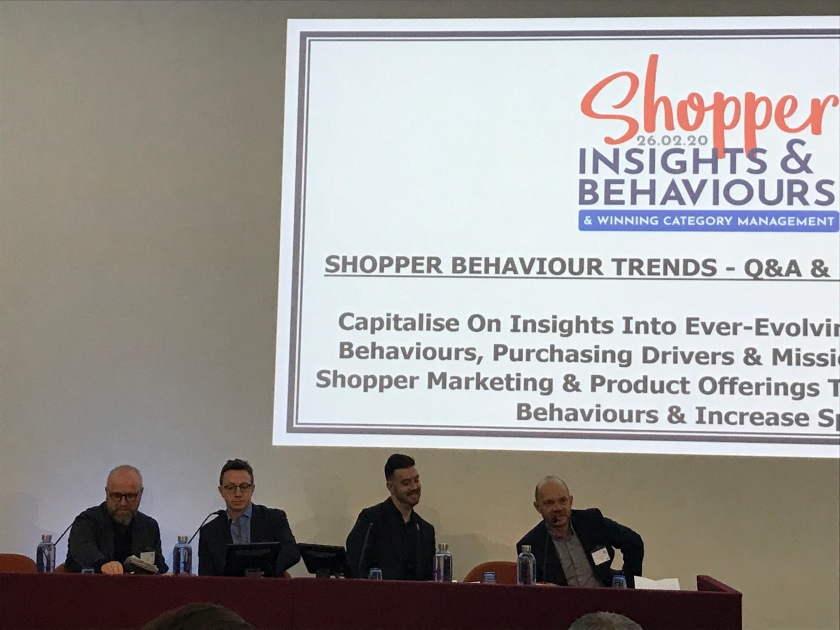
I’ve just spent the day at Shopper Insights and Behaviours conference chairing the afternoon session and speaking in the morning session.

Theme of my presentation:
If organisations are going to transform using data , they need to be clear, unambiguous and aligned around an agreed vision , strategy and execution plan to be successful. All pointing together towards True North.

1. I laid out the what and how of transformation.
2. I talked through examples of how organisation have delivered transformational improvements to The Customer Experience , Customer Communication and Understanding of the Customer.
3. I then talked through my experience of how to deliver transformation in retailers, and how suppliers and retailers can work together to drive change. 

Other Key out-takes from the sessions :

Great case studies on solving strategic problems from

  1. Gary Seaman (RB) on developing environmental brands in cleaning.
  2. Chris Wrighton and Daniella Basain (Premier Foods)on turning around a declining MrKipling Brand
  3. Gizem Donmez (Nelsons) on starting with customer understanding in developing an omnichannel approach for Rescue Remedy
  4. Scott McPherson (Nairn’s) and Giorgio s Argyropoulos (Pepsi) on How Insights around missions need to be applied in the Convenience channel.

Panel Discussions with James Brett (Twinings) Maxime Dassonville (BIC) Neil Bellamy (General Mills) Sean McKee (Schuh) Daniella Bassein (Premier Foods) Dev Mukherji (PostOffice)  David Harrison (Coop) Caroline Walsh (Musgrave)

IMG_0111

Key uptakes from the sessions and the panels

A. Deep understanding of shopper Needs: many techniques exist to deliver a deep understanding of customers ( with lots of technical suppliers in Martech specs). Nothing really beats watching customers first hand in stores , but using all the different techniques starting it’s important to start with clarity on the problem you are trying to solve first.

B.Technology Suppliers know their stuff but aren’t clear what problem their product solve – they don’t know how to sell or make it easy to buy. “There is a myriad of Tech companies but there is no technology to help me understand customers in store” James Brett.

C. Insights being split into two types of work: Strategic and tactical.

  1. Strategic deep view of understanding customers : longer term projects where spend time thinking about the problem as well as how to solve it. Look at triangulation or longer term trends, qual, quant.
  2. Tactical view quick response using panels, Skype groups, observations in store.

D. Insight Leaders becoming agnostic about mechanic, bigger focus on understanding the problem and then working on the solution. There needs to more of a focus on howdo you get clear on problem you are trying to solve. There is a recognition that retailers aren’t totally clear and aligned on the problems, and there isn’t alignment between suppliers and retailers.

Really understanding the problem and creating alignment around a solution is the challenge

F. Insight into Action: insight leaders need to be commercial as well as customer to align the organisation around change.

G. Understanding Retailers and Partnering with them. There was a consistent message from many speakers and participants that this was a key issue for suppliers: Understanding How CPG work with retailers to grow categories was an interesting panel session Good case studies and discussions from Premier Food (Chris & Dani) Dev & Giorgos  and David from Coop. Neil Bellamy From General Mills recommendation was to get clear on a message and identify and work with multiple stakeholders in retailer. Dani recommendation was to start with customer and see how that also aligns with retailers’ strategies Dev suggested focusing on Missions and integrating from prestore to purchase.

Building a consistent story and presentation that drives sales was a challenge many suppliers had with retailers: best solved by having a supplier and retailer perspective underpinned with a razor like focus on a commercial customer focus.

Protect your non-work time

smiley post it note on corkboard happiness versus depression concept
smiley cartoon face expression on yellow post it note surrounded by sad and depressed faces on cork message board in happiness versus depression and smile against adversity concept

Protect your non-work time

Leadership tip of the week #111

adapted from HBR

As more people are adapting to working from home, we are all learning to adapt:  jobs used to have very clear lines between when you’re “on” and when you’re “off.” But when you working from home — it’s important to protect your non-work time.

  • If you feel like work is taking over most of your waking hours, start by clearly defining what “after hours” means for you.
  • Take into account the number of hours you’re expected to work each week, as well as personal commitments like taking your kids, family and some me-time
  • When do you need to start and stop to put in the appropriate amount of work time?
  • Then, develop mental clarity about what needs to get done and when you will do it.
  • Keep track of your tasks and plan them out.
  • Make sure you block off time for an end-of-workday wrap-up, where you review and make sure you did everything you needed to do for the day.
  • Lastly, communicate with your colleagues about how (or if) you want to be contacted during your off hours.

Really guard your time. If you don’t, you won’t get the mental break that everyone needs

Move Beyond Your Ego with Meditation


3E865480-66D1-4B6B-B325-0039AA4D4363Move Beyond Your Ego with Meditation

Leadership Tip of week #108

adapted from HBR

Ego can stand in the way of good leadership.

When our egos are threatened, we hold on to past decisions for too long, we react defensively to negative feedback, and we get emotional when we need to be rational. Fortunately, mindfulness meditation can serve as an antidote, allowing you to see things more objectively and to form deeper relationships. Commit to meditating for a short time each day.

Find a quiet place, sit comfortably on a chair or cushion, and set a timer for anywhere between five and 25 minutes. Then simply start observing your breath. Allow the mind to detach from your thoughts and to experience a sense of openness.

Then use what you gain from this practice throughout your workday. You might quiet your mind with a few conscious breaths before you enter a meeting or open your email. Or practice in the moment: For example, while you’re sitting in a meeting, turn your focus to your breath, and simply notice if your mind has started to take things personally. Even just taking a few breaths in and out can help lessen your ego’s grip.

This tip is adapted from What Meditation Can Do for Your Leadership,” by Matthias Birk

Zig while amazon zags

or 5  ways to compete with Amazon

7D9FE3EA-A4CB-41A1-80DB-11BB7B801812

One of the biggest challenges that face retailers at the moment is how to compete with the jugganaut that is amazon. Powered by the profit driver in AWS:amazon web services and more recently AAS: amazon advertising services the retail industry fears their arrival.

First understand them . the best way to get into amazon’s DNA is to read the letters to shareholders that Jeff Bezos has written every year since he started in 1997. Look out for a seperate blog on that subject coming soon .

The second defence is attack 

Strategy #1: Own the pre- and post-transaction experience
Amazon are very focused on making the transaction as easy as possible at low cost, but we still have to assemble solutions on our own. If an organisation offers a ready-made solution that saves us time and effort (at a price we can live with), we’re grateful.

  1. Meal delivery companies, for example, have leveraged this basic insight to create a new category. Cooking a meal is time consuming: go to the supermarket, fight through the crowds order to find a few ingredients, wait in a long line, lug your bags home, put everything away, measure and chop the ingredients, and assemble the meal.Meal delivery companies like Gousto, HelloFresh, and simply cook eliminate all of these chores but the last one by shipping pre-made meals that require very little prep. (Amazon launched their own meal kit delivery service in July in order to catch up after falling behind for five years.)
  2. Furniture  or Clothing : Virtual Reality is allowing you to select and choose furniture or clothing that fits your room or you.Once you’ve selected what you want to buy, sometimes extra effort is needed to actually assemble, install, learn how to use it, customize it, and then repair it once it breaks.
  3. Electrical retailers: DixonsCarphone Warehouse are competing vs amazon in electrical by offered get technical support pre and post purchase. Installing Fridge freezers, Kitchen ranges / recycling fridges.
  4. Garden Retailers offering Garden Services
  5. Mothercare offering to come and assemble the cot or bed for you rather than you have to put things all together.
  6. Laura Ashley assembling beds.

Strategy #2: Turn your services into a platform
The fastest-growing companies in history, such as Google, Facebook, Uber, Airbnb, Amazon, and Netflix, are all platforms. The platform business model captures the most profit, builds a moat that is hard for competitors to cross, and scales quickly once it reaches critical mass. While building up a global workforce of employees to offer support services may take massive amounts of time and capital, a platform can get there in a fraction of the time. And, if you don’t do it in your niche, it’s likely that Amazon will — if it hasn’t already.
Amazon Services uses a platform model to deliver hundreds of services at scale including services with and for the home, automotive, electronics, yard and outdoor, assembly, health and wellness, lessons and classes, and pet services. It even has an Uber-like service, Amazon Flex, which has drivers in 30 cities who deliver Amazon products.

You can build a platform by focusing on your niche , playing to your strengths, particularly your unique understanding of your customer, in order to more effectively recruit, vet, train, and manage a network of service professionals and help them solve the specific problems that customers in your niche face. The most successful platforms in the world aren’t ones that offer every service under the sun. They are ones that are the most focused.

  • Uber is a platform that has focused on logistics and transport
  • Netflix is not trying to meet all entertainment needs, but focused on emotional connection

Netflix founder Reed Hastings: “We’re not trying to meet all needs. So, Amazon’s business strategy is super broad. Meet all needs. I mean, the stuff that will be in Prime in five or ten years will be amazing, right? And so we can’t try to be that — we’ll never be as good as them at what they’re trying to be. What we can be is the emotional connection brand, like HBO. So, think of it as they’re trying to be Walmart, we’re trying to be Starbucks. So, super focused on one thing that people are very passionate about.”

Strategy #3: Reduce every point of friction in your customer’s journey until you hit a ‘wow tipping point’
To reduce the friction at every step of your customer’s user journey, leverage your own customer data to uncover friction points and relentlessly remove them. Start by removing glaring problems. Then keep going until you reach the ‘Wow!’ tipping point
A hallmark of many of today’s most successful companies, is that they don’t stop improving their product once it’s good enough. They identify every interaction their brand has with a customer and aim to make it a ‘Wow!’ experience. It’s not just tech firms; retailers are taking note as well.

Strategy #4: Create a must-have brand and then use it as leverage
One of the biggest threats to Amazon is the power of brand. A truly powerful, must-have brand like Apple or Disney doesn’t need Amazon to succeed. They have built a direct relationship with the consumer. As a result, Amazon has lost tens of billions of dollars in potential revenue because people buy Apple products on Apple.com or in the Apple STore. Furthermore, Amazon’s whole business model is antithetical to people’s innate desire to display their personality and status through what they purchase. There is always going to be a segment of people who value self expression over low prices and convenience. The luxury category is one of Amazon’s Achilles’ heels.
Amazon is confronting the ‘brand’ threat in two ways.

  1.  First, amazon has shown that it’s not afraid to build or acquire its own brands (19 in total). Amazon also leverages its data on which products sell best in each category to launch its own generic brand, Amazon Basics, which now has over 3,000 products. In each category these products appear in, they are featured.
  2. commodifying brands by forced discounting, using its direct relationship with customers and audio purchasing to push competing commodity brands. With Amazon Alexa, customers can say, “Buy toothpaste,” and Amazon will send its recommended toothpaste rather than the toothpaste with the best brand, for example.

Make no mistake, Amazon is trying to destroy the value of branding overall and learn from your customers in order to compete with your most profitable products. Bezos’ famous saying, “your margin is my opportunity,” is particularly relevant here. Branding creates a perception that facilitates charging a higher price. Bezos is attacking that pillar of higher prices.
By having a must-have or a luxury product, you give yourself choices on how to leverage your brand:

  1. using an embargo period Netflix keeps its original content exclusive to Netflix for a certain number of days and then sells it on iTunes and other platforms. The other platforms are not only sources of cash, they are also marketing.
  2. allowing just some products to be sold on Amazon (sell some brands on Amazon and others only on your own site),
  3. not selling on Amazon at all (Birkenstock, for example, prohibits its sellers from selling on Amazon. Sales tripled to $800 million last year),
  4. partnering exclusively with one brand. (Martha Stewart has a multi-year exclusive agreement with Macy’s).

Strategy #5: Defining the problem & Extreme Experimentation

Amazon really understands the problem that they are trying to solve. and works hard to clarity the brief for any new innovation, making it crystal clear what the customer problem is they are trying to solve and then how they will develop a proposition to solve that problem .

This, more than any other strategy, is why Amazon is so successful: Amazon is not a traditional business. If you think it is you have already lost. You are competing against an economy.

Part of what makes the Economy Pyramid Model so successful is the sheer quantity of experimentation. Amazon’s culture of listening to customers , defining the problem & experimentation is so deeply ingrained that Bezos has repeatedly gone on record saying that Amazon’s success is directly correlated with the number of experiments it performs.

Amazon isn’t just experimenting internally with new platforms like Alexa, Kindle, Flex, Marketplaces, and dozens of others. Each of those platforms then empowers an economy of producers to create millions of experiments. In so doing, Amazon passes the cost of experimentation on to producers, receives income for each experiment, and then doubles down on the blockbusters by creating their own competing brand. It’s a brutally effective strategy. Amazon aggregates producer experiment data to launch its own competing products.
In a world that is rapidly changing, the companies that succeed will be those who increase their rate of experimentation faster than the environment changes. And Amazon is a core part of that environment.

If you need help in defining the problem and creating experiments contact me.

5 ways great leader promote innovation

5 ways great leader promote innovation

retail leadersI have known many CEOs and CMOs over my career. The best ones created innovative transformational cultures. Many tried. Some failed to comprehend the definition of the word itself; others lacked the vital leadership traits to inspire creativity and implement great ideas. Those who were adept at driving innovation and sustaining it over the long haul had one thing in common: they were hard-headed.

Their tough-mindedness came from an unshakable belief that innovation is critical to corporate survival, and that without powerful and constant change, innovation would be elusive. These trailblazers were innovative leaders, but surprisingly some of them weren’t creative, themselves. That didn’t matter because they were good a recognizing great ideas and welcoming change. No change, no innovation.

So, how do unshakable leaders create change and how to they sustain the innovation outcome?

  1. They unsettle the organization. There’s a host of companies that get things done, control performance, spot problems and deliver their budgets. But the structures, the processes and the people that keep things ticking along can snuff good ideas and block movement through the system. Innovative leaders appreciate that there is a difference between what’s needed to run a business and what’s needed to foster creativity. This ethic prevents excessive layering from killing ideas before they reach the top.
  2. They’re hardheaded about strategy.  Leaders who embrace innovation have a pretty clear idea of the kind of competitive edge they’re seeking. They’ve thought hard about what’s practical and what’s not. So the approach is not wishy-washy, but focused and driven. When this methodology brings results, employees become disciples of the strategy and the culture that facilitates execution.
  3. They make innovation a priority in the “walk” as well as the “talk.” When executive teams demonstrate innovative thinking and practices, the rest of the organization is clear on direction. This facilitates coherent cross-functional teamwork and an innovative modus operandi that encourages diverse viewpoints.
  4. They take note of what’s already going on with a view to balancing creative thinking with the discipline of assessing solutions and their implementation. The best backdrop for spurring innovation is knowledge – knowing the business cold. Good ideas often flow from the process of looking at customers, competitors, and the business as a whole.
  5. They appreciate that not many ideas work the first time, so they’re prepared to praise failure, move on, or try again until the company gets it right. From there, innovative leaders marshal resources behind a few winners and then execute like the SKY Cycle team

Innovative leaders are a special breed. They aren’t as interested in “minding the store” as they are about “opening new stores.” Nor are they shy to admit to controlling strategic direction, influencing the culture, and monitoring the process and practice that unleashes business’s most elusive success factor.

Always checking the phone ?

obsessively checking phoneHow to stop constantly checking your phone 

Leadership Tip of week#105

adapted from HBR

It can be hard to focus with all that beeping and buzzing from your phone. I know, it can really create distractions and reduce effectiveness.

Fortunately, there are simple ways to reduce distractions.

  1. Start by turning off push notifications.
  2. If that doesn’t help, use airplane mode to limit interruptions when you’re trying to focus.
  3. If the idea of being out of touch gives you anxiety, you can always make exceptions for specific numbers, such as those of loved ones or important business colleagues.
  4. Try to check email, instant messages, social media, and text messages in batches, rather than sporadically throughout the day. “Just quickly checking” anything, even for one-tenth of a second, can add up to major productivity losses — it can take an average of 23 minutes to get back in the zone after task switching.
  5. It’s OK to not respond immediately to a message. Aside from the benefit of giving you more uninterrupted focus time, delaying can lead to better decision-making by giving you more time to think about your response.

This tip is adapted from 10 Quick Tips for Avoiding Distractions at Work,” by Steve Glaveski

Mary Meeker Internet Trends Highlights

11 Highlights from Mary Meeker’s “Internet trends report”

revisited for 2020 New Year

mary meeker 2019

Mary Meeker released her 2019 Internet Trends report in June but I thought it would be useful in the new year to have another look at it to see what it brings for 2020 .

This year’s total slide count came in at 333, up from 280 when compared to the previous year. And while some of Meeker’s insights may be obvious (subscriptions services are luring new customers through free trials) other observations are more insightful  (Fortnite is more akin to a social media platform than video games.

1. For the first time, Americans spent more time on their mobile devices than they did watching TV. A 2019 estimate suggests that adults spent an average of 226 minutes (more than 3.5 hours) on their phones compared to 216 minutes on TV. For comparison, 10 years ago, TV reigned with 266 minutes-per-day while mobile use clocked in at just 20 minutes.

2. Multiplayer video games such as Fortnite which command some 250 million active users, most of whom are under age 17, are becoming increasingly similar to social media networks, thanks in large part to events such as DJ Marshmello’s concert, which attracted nearly 11 million people in game. Also fueling its rise are platforms such as Twitch and Discord, which act as a sort of new town hall for Gen Z.


3. An increasing number of people are using images to communicate: More than 50 percent of all tweets, for example, now include images. People are also taking more pictures than ever before and platforms such as Instagram are amplifying this relatively new style of digital communication. Text really is a less-than-ideal mode of communication, We’re translating ideas and emotions into symbols and hope they’re decoded properly. The more visual our communication platforms become, the better storytelling we as advertisers can do.

4. For the first time, more than half of the global population were identified as internet users. In 2018, the report found approximately 3.8 billion people—51 percent of everyone on Earth—were connected to the internet, up from 3.6 billion (49 percent) in 2017.

5. New platforms are emerging as hubs for internet ad spend   Amazon, Twitter and Pinterest collectively saw 6-times year-over-year growth since 2017. Still, Google and Facebook reign supreme and continue to see steady growth, but watch out!

6. In 2018, American adults spent an unprecedented average of 6.3 hours per day interacting with digital media—time which was largely split between mobile devices at 3.6 hours and desktop or laptop computers at two hours. The amount of time U.S. adults spend per day online jumped 7 percent year-over-year from 2017, and was more than double the amount of hours they spent online in 2010.

Insight: “The lines between search, social and e-commerce continue to blur and Facebook and Google should check their rearview mirror for Amazon—it’s a lot closer than they think, Meeker reports that Amazon’s ad business is up 2.6-times in revenue but what she doesn’t note is that others are jumping on the bandwagon—Instagram, Google and even Walmart have all made competitive moves in the space.

“As customers spend more time than ever on digital media—6.3 hrs per day—and e-commerce contributing to 15 percent of all retail sales (slide 20), advertisers have a captive audience ready to click ‘buy.’”

7. Free trials were the most effective marketing tool for online streaming services to attract new users, with 42 percent of consumers listing “free trial tier” as the most compelling reason for trying a new service.

8. A growing number of adults report being online “almost constantly.” Twenty-six percent of American adults rarely disconnected from the internet in 2018; among the 18-to-29 demographic, that number jumps to 39 percent, according to Pew Research cited in Meeker’s report.


9. Most television viewers are multi-platform multi-taskers, with 88 percent of viewers saying they use a second digital device while watching TV and 71 percent saying they look up content related to what they’re watching mid-show.

10. Messaging platforms offering automatic or optional end-to-end encryption are rapidly rising in popularity with secured services like Telegram and WhatsApp outpacing the growth of non-encrypted messaging services like Twitter and China’s WeChat. At the start of this year, 87 percent of web traffic was encrypted, compared to just 53 percent in 2016.


11. Despite people spending more time online, digital ad revenue slowing down : The report says digital ad revenue grew 20 percent, down from 29 percent year-over-year.

Insight: “Since there is more spend on the platform and more businesses leveraging these paid media platforms, that means there is now more competition,” “In order to reach your target market, it will come at a higher price because there is the same [amount] of supply but more demand.”

Security and regulation such as GDPR are also playing a role in the slow down. “Privacy consciousness is rising and the tech industry is making changes on that front, but privacy by default is increasingly required by lead users,” “As users become more aware of surveillance capitalism, solutions that put the user first will reshape the landscape.”

Hope you found this overview useful but…. if you want to see the whole presentation you can find it at Bond Capital on the link here:

Don’t just do something, Stand there

eisenhower

Don’t Just do something, Stand there.

Leadership Tip of week #109

adapted from HBR

(famously attributed to Eisenhower and Reagan)

As a leader, you probably have to talk a lot.

You want people to have the guidance and direction they need, of course, and there are plenty of situations where you need to speak your mind.

But at some point, talking a lot can turn into over-communicating. You can end up dominating conversations, which means colleagues’ perspectives aren’t being heard.

To make sure you aren’t talking too much, listen as much as you speak. When someone raises a question in a meeting, invite others to weigh in before you. In fact, don’t contribute your thoughts until several other people have offered theirs. That way everyone is included and feels that their input is valued.

You can also schedule regular one-on-one sessions with your team members to encourage open communication. Ask employees about their wants, needs, and concerns — and then hush. You may be surprised how much you learn when you’re saying nothing.

This tip is adapted from Don’t Be the Boss Who Talks Too Much,” by Hjalmar Gislason

The Three Kinds of People You Want on your Next Big Project

harley-havidson-dog

The 3 Kinds of People You Want on Your Big New Project

Leadership Tip of the Week #104

adapted from HBR

When you’re building a team for a high-profile project, you want an all-star team.

But it’s not enough to put your high performers on the task.

There are three types of people who should be on the team of any breakthrough initiative.

1. look for people who are comfortable with uncertainty. You need individuals who will remain curious and focused even when the project is far from the end goal.

2. be sure you have people who create structure within chaos and take action. These workers can drive a team forward even when circumstances change.

3. find people who have a combination of three critical traits: divergent thinking (the ability to connect seemingly unrelated information and ideas); convergent action (the ability to execute on ideas and create something tangible); and influential communication (the ability to share knowledge in a coherent, compelling way).

Lots of people have one of these critical traits, but your project team needs employees who have all of them.

Adapted from “If Your Innovation Effort Isn’t Working, Look at Who’s on the Team,” by Nathan Furr et al.

Getting Better at something requires commitment

customer 17

Getting Better at Something Requires Commitment

Leadership Tip of the Week #103

Adapted from HBR

We all want to get better at something.

Maybe you’d like to be a more inspiring leader, be more productive, or take more risks. But ask yourself two questions.

1. Do you really want to do better? Presumably the answer is “yes,” but if you’re looking to improve because, say, your boss wants you to, be honest about that. Change will happen only if you’re committed to it.

2. Are you willing to feel the discomfort of trying things that don’t work right away? Learning anything new is inherently uncomfortable, so be prepared to feel a little awkward. You will make mistakes. You may feel embarrassed or ashamed, especially if you are used to succeeding. But if you remain committed through all of that, you will get better.

Adapted from “If You Want to Get Better at Something, Ask Yourself These Two Questions,” by Peter Bregman

3 work skills that are useful at home

28A5A972-7B7A-4491-84B6-7FA94910DE73Leadership Tip of the week #106

Adapted from HBR

3 Work Skills That Are Useful at Home, Too

Is your home life more chaotic than your work life? If so, you’re not alone, and some of the skills you use in your job can help.

  • Planning and scheduling. Do you struggle to finish your personal to-do list? Block out time in your calendar for the things you need to get done (even mundane tasks like laundry and errands). You’ll feel more in control and more productive.
  • Decision making. is about understanding how your actions affect other people. To improve, pay attention to how your colleagues react to things, and ask yourself (or them) what could be behind their behavior.
  • Putting people first. At work, would you idly check your phone while a client speaks? Of course not — and our families deserve the same respect. Try to give people your full attention at home, even after a long day of work. It will help you feel more connected to the ones who matter most

Keep Improving your Emotional Intelligence

28A5A972-7B7A-4491-84B6-7FA94910DE73

Keep Improving Your Emotional Intelligence

with a Specific, Feedback-Based Plan

Leadership Tip of Week #102

adapted from HBR

It’s not always obvious how to improve your emotional intelligence skills, especially because we often don’t know how others perceive us.

To figure out where you can improve, start with a reality check:

1. What are the major differences between how you see yourself and how others see you? You can get this kind of feedback from a 360-degree assessment, a coach, or a skilled manager.

2. Consider your goals. Do you want to eventually take on a leadership position? Be a better team member? Consider how your ambitions match up with the skills that others think you need to improve.

3. Identify specific actions that you’ll take to improve those skills. Working on becoming a better listener? You might decide that when you’re talking with someone, you won’t reply until you’ve taken the time to pause and check that you understand what they said.

Whatever skill you decide to improve, use every opportunity to practice it, no matter how small.

Adapted from “Boost Your Emotional Intelligence with These 3 Questions,” by Daniel Goleman and Michele Nevarez

Offer stressed-Out colleagues Praise & Assistance

people4

Offer Your Stressed-Out Colleagues

Praise and Assistance

Leadership Tip of week #103

adapted from HBR

You know the stress case — the one who’s always overwhelmed, overstretched, and overextended.

They aren’t easy to work with, but you probably don’t have a choice. Whether you regard your colleague with annoyance or sympathy, you can help them by offering praise and assistance.

Your coworker likely feels out of control, so complimenting their performance can help them form an alternative self-image as a competent, positive professional.

Cite something specific. For instance, you could say, “The way you handled that presentation last week was admirable. You were so calm and collected, and the clients were impressed.”

You can also provide support by asking if there’s anything you can do to help, which might make your stressed-out colleague feel less alone. Don’t over-promise, though. The message should be, “I’m a limited resource, but I want to help you if you are struggling.”

Adapted from “How to Work with Someone Who’s Always Stressed Out,” by Rebecca Knight

Culture is all around us

110539CE-A5D8-44ED-8A9E-96BD2929582B

Culture is all around us. Our shared values and beliefs are palpable in the places we visit and the people we meet. We absorb those values from the media we consume and the ideas we expose ourselves to. One of the best ways I know to witness how we can shape our culture is to take a taxi ride in a new city.

i’ve just spent 4 days in Amsterdam  speaking at a conference and had some great time walking around the city getting to know its distinct culture.

Every vehicle has a distinct culture that’s created by the driver’s posture. It starts with how the driver dresses and the conversation he or she makes. It’s heavily influenced by the cleanliness of the car and the kind of music the driver plays. And of course, it’s dependent upon his or her attitude to other motorists and how each driver finds meaning in their work. The environment can soothe or agitate, demotivate or inspire.

In taxis on every continent around the world, you can encouter zen and mala beads, negative news channels on the radio accompanied by rude hand gestures out the window. You will meet people who find dealing with passengers a chore and many more who are grateful for work and the feeling of autonomy.

In our communities and businesses, we often lament over our lack of control. We get despondent about what can’t be done to change things—all the while overlooking the endless opportunities we have to change everything.

We are the community, the business and the culture.

We are the makers and the making of the entities and places that shape our world.

We are more powerful than we think.

Zippin through the store

7CEA5DC8-4E5B-4848-B9BC-49A85AE10B85

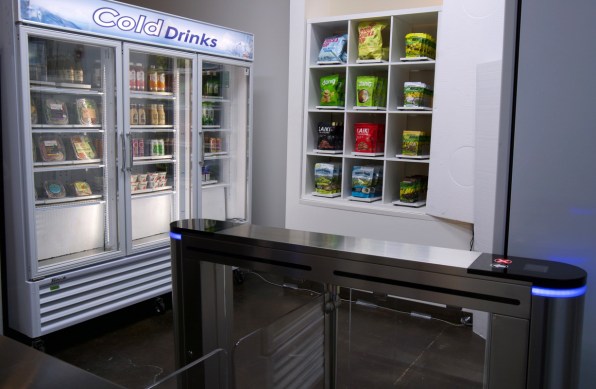
A Bay Area startup has launched a small public demo in San Francisco that will grow into a full-sized AI-driven convenience store in the coming months.

A Cooler with soft drinks and sandwiches and a shelf full of crisps is just the beginning for this start-up Cashierless C-store concept by Zippin that launched recently. But the Beta concept will scale rapidly Into a fully fledged C-Store as learnings are applied.

The concept uses relatively inexpensive cameras and weight sensors on shelves. The camera feeds are analyzed by algorithms trained through machine learning to recognize the appearance of each product the store carries.to accurately understand when a customer picks up items and puts them in a bag or pocket.

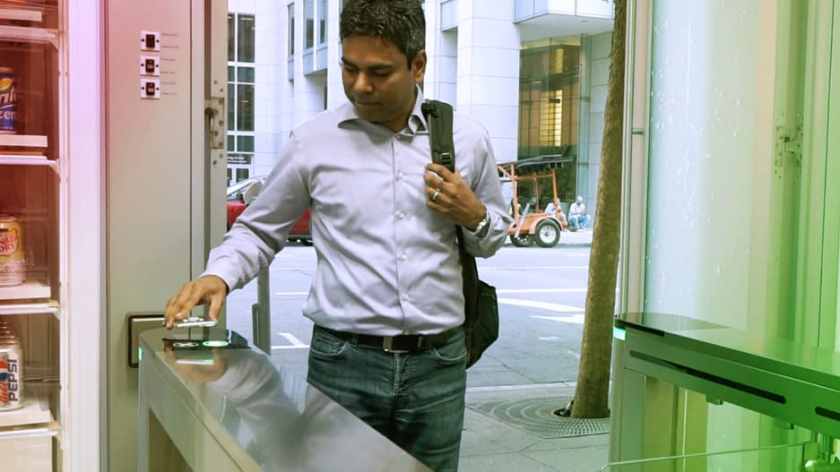
An app is used to sign in and complete the checkout. This also improves the customer experience as customers get used to the technology, and learn how to use it by signing in ( we found that helps customers know that we know they aren’t stealing things ) as well as quick payment.

9674F224-F13B-473B-BC53-DE270CD5E75D

Amazon-Go is rolling out in further stores in San Francisco and New York as well as rumoured to be looking in London. Walmart has just announced a larger less tech but still cashierless store in Dallas.

Zippin will provide another technology that will allow retailers to compete with Amazon-Go in the Better, Simpler, Cheaper stake.

Put Down your Phone in Meetings

3A42751B-ACAB-44E3-B3CA-5D57D6542B87

Leadership tip of the week #102

Adapted from HBR

If you’ve ever wondered whether you have a colleague’s full attention while they’re staring at their phone, stop wondering.

You don’t.

But instead of getting frustrated that coworkers constantly check their devices during meetings, take action.

  1. You might start by sharing research that shows even the mere presence of a cell phone — much less its glowing screen and constant buzzing — is bad for productivity.
  2. Then talk with your team about the upsides and downsides of using devices during meetings.
  3. Propose ground rules like “Be totally present” and “Keep the phone in your pocket.”
  4. The team could also agree to use a simple phrase like “Tech-check” as a friendly way of reminding someone to put their phone away.
  5. Once a few rules are in place, stick to them — and point out when a colleague doesn’t.

You might get some annoyed looks at first, but over time the team will set a new norm.

Adapted from “How to Get Someone to Put Away Their Phone and Actually Listen,” by Joseph Grenny and Kelly Andrews

Culture Ripple Effect

9933611F-ACAB-4F48-B432-015748CDEB0B

Leadership Tip of the week #101

adapted from HBR

By the age of six months, a baby begins to understand that his actions can affect his environment.

It’s amazing how as adults we quickly unlearn this.

As business leaders when we talk about shaping or changing company culture we sometimes forget to own the fact that we are the culture. Culture is not something that is laid down in a strategy document, or changed in the blink of an eye at an offsite event designed to rally the troops. Culture is how we act every day. It’s impacted by how we as individuals choose to behave and evidenced in the ripple effect that our actions catalyse.

When we seek change we often start by looking to see what we can change in others, forgetting that the ripples begin right where we are.

We must walk the walk and Talk the talk

Don’t Say “Change Is Hard” When You’re Asking People to Change

change

Leadership Tip of the Week #100

Adapted from HBR

When a change initiative hits a roadblock, leaders often remind people that “change is hard.”  But that old saw can become a self-fulfilling prophecy.

Momentary setbacks or delays can be viewed as the dead canary in the coal mine, and suddenly, employees disengage en mass.

Instead, try flipping the script. In a University of Chicago study, researchers were able to change participants’ mindsets by reminding them that most people improve with a little bit of effort.

The results?

Study participants were quicker to identify the upsides of change than the downsides.

Instead of accepting that initiatives rarely succeed, remind yourself and your team that you’ve all been learning new skills and adapting to new environments for your entire lives.

And every time you feel the impulse to say “Change is hard,” make a different claim, one that is every bit as accurate: Adaptation is the rule of human existence, not the exception.

Adapted from “Stop Using the Excuse ‘Organizational Change Is Hard,’” by Nick Tasler

Seven new realities of retail world

data-driven-marketing-4Consumers have fundamentally changed how they shop and how they buy. This shift has forced retailers to adapt to a new paradigm. Here are the seven realities of the new retail world

  1. A proliferation of new technologies has created substantial new opportunities to understand and serve customers, which means organisations must put forth the effort to integrate new technology into regular processes and procedures. Don’t start with technologies but start with people & processes.
  2. Removal of the Silos of  data and departments must be broken down to enable centralized data.
  3. Retailers must build complete, 360-degree portraits of customers to recognize them as individuals and understand their buying behaviors. Consumer personas are key to relevant and personalized experiences for customers who represent high-value potential for pro tability.
  4. Brands must reach across all channels and devices to provide meaningful experiences based on each consumer’s demonstrated preferences.
  5. The Customer Shopping Experiences across physical and digital channels should be seamless for consumers, while digital and physical measurement and attribution should be seamless for retailers.
  6. Consumers now expect personalised and relevant content that retailers can and must deliver, using data-based insights, to drive the best customer experience.
  7. All data must be handled in a transparent and ethical manner, with retailers accountable for ensuring it is used in ways that bene t consumers and protects them from harm.

Become the Future: know your customer

customer 5

BECOME THE FUTURE — KNOW YOUR CUSTOMER

With every new opportunity to engage and serve we are also provided an opportunity to learn. Smart retailers will use all of this to drive singularly and powerfully toward one ultimate goal…

Creating profound, data-informed, connections with your consumer.

We must never lose sight of the big picture to connect with and enrich the lives of each consumer as a unique and recognised individual. In the new world of retail, the future is a seamless and meaningful connection … and the future is here.

As we’ve seen, both from research and in execution, using integrated technology to understand, reach and provide value to your consumer is a strategy that works. But becoming exceptional, when it comes to ethical data gathering and deployment, isn’t just a good idea, it is the fundamental route to survival for modern retailers.

In spite of the state of urgency created by the increasing demands of consumers, many retailers are still behind the curve on both industry adoption and meeting customer expectations.

From seamlessly blended digital and offline worlds to introducing products and ideas that users don’t even know they want yet, today’s leading retailers are those who are setting trends — not merely keeping up with them.

As we look toward the horizon, we will find the brands that embody progress and thrive on the bleeding edge of technology will become the aspirational beacons in their space. The ability to cultivate breakthrough campaigns and captivate both your customers and your competitors’ customers is within your reach.

New Leaders: Bring people with you

great leaders business

New Leaders: Bring People with you…

Leadership tip of the week #99

adapted from HBR

When you start a leadership role, there’s pressure to prove yourself by getting off to a quick start and delivering early wins. But if people sense that you’re making a change without thinking it through — or getting their input — you’re unlikely to be successful.

That’s why you need to slow down, especially in your interactions. When talking with new colleagues, repeat what you hear, both to confirm your understanding and to demonstrate that you’re listening.

Ask the group reflective questions such as, “What just happened here?” and “What could we learn from that?”

These questions force a pause, preventing a discussion from rushing to a decision.

And don’t be afraid to use silence.

Pausing before you speak gives you a chance to weigh alternatives and decide on the best way to respond. It also pushes others to wonder what’s going through your mind, which may cause them to think more creatively.

Adapted from “Why New Leaders Should Be Wary of Quick Wins,” by Dan Ciampa

5 tips for driving (digital) success

5 fingersHere are 5 simple tips will help drive success in your organization and make you a (digital) hero:

1. Identify and understand the problems
This is so trivial but yet incredible important and frequently ignored. Companies, governments and other organizations try to solve problems without understanding them. The first step of solving any challenge, with our without technology, is to identify and understand the problem(s). I use plural because we often jump on the first problem when there are several. There’s a myriad of great tools to identify problems including the 5 Whys, Customer Journey mapping, Customer Research, and more.

2. Be inspired and challenged by great people
The honest truth is that most people are comfortable with what they have and know. The unknown and change is frightening. But to survive in the current competitive, fast-moving world we need to challenge ourselves to consider other points of view, think differently, and to change fundamentals.

These are a few ways you can challenge yourself:

  • Follow people on Twitter and LinkedIn such as Tom Goodwin, Martin Lindstrom and Benedict Evans
  • Meet and hire partners that will challenge you (and don’t always agree)
  • Talk to the competition’s customers

3. Always involve unbiased customers
Another basic mistake too many organizations make is solving problems without involving the people that are intended to use it. For example launching a website without testing the concept, content and final design on the intended target audience or deploying an expense management tool without including employees in the evaluation and implementation process.

Lack of time or cost are common excuses, but how much time and money do you lose when a website or software doesn’t achieve its goals?

Always involve end users at every step of the way. Remember that colleagues or the boss are usually not representative of the end users.

4. Define clear success factors, measure and follow-up
How do we know if we’ve achieved success if we didn’t define it in the first place? Many organizations have too generic or end-goal-centric metrics. The most common measures of success are revenue growth and cost savings. The challenge with these is that it’s usually not possible to measure success until e.g. 3-6 months after the project has been completed.

A better alternative is to include success factors that can be measured throughout the project. For example user task completion rate, satisfaction and sticking to the MVP timeline.

5. Understand why Culture eats Strategy for breakfast
Want to change the business or organization? Think that a new app, knowledge sharing system or HR website will achieve radical change? It won’t unless people want change. Ensure that every initiative to change has a plan to get buy-in from the organization including the grass roots. No. 3 above will help, but is not enough.

Use these 5 tips in whatever you do and I can promise you a greater chance of success. Furthermore there’s a pretty good chance that the organization will consider YOU a digital hero.

Amazon-Go leading the way

50823D32-9F8E-4366-911C-08E7E8142309

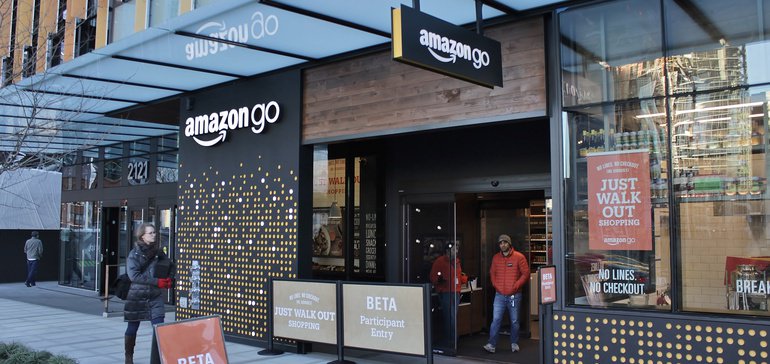
Amazon opened a fourth Amazon-Go cashier less convenience store in Chicago, the first location outside Seattle. The new store is at 113S Franklin St in Chicago’s Loop, one block from one of the City’s elevated train routes and within a few blocks of Union Station. Good C-Store location dense with Office workers and on a commenter path.

Amazon-Go using camera technology, scanners and Machine learning algorithms to improve the customer journey.  They may be ahead in technology but they still have a long way to go understanding Food Retailing.

Read here about the first store AMAZON GO-GO

Amazon isn’t the only one chasing a cashier less vision, Frictionless shopping is the goal of many retailers and start-ups.  Companies like Standard Cognition and Zippin have opened their own pilot stores so other retailers can use the technology.

Standard Market based in SanFrancisco is a concept store that users overhead cameras but no sensors to correctly matches items to the right shopper, detects when a shopper returns an item to the shelf or puts it in a bag or a pocket. (View a video HERE) Customers download the STandard Checkout App to shop and checkout. No scanning required for a frictionless experience.  View more detailed story HERE,

Zippin are a startup based in BAy Area of SanFrancisco and have a Beta-Concept store where they are learning fast  READ more HERE

MobyMart in Shanghai is learning fast  ( read story HERE)

and in UK Tesco and Sainsbury’s are trialing stores where customers scan the products themselves and then have a simpler checkout on a phone.

Making it as easy and frictionless as possible is the battleground of retail in the next few years and using data and digital to deliver a Better, Simpler, Cheaper Shopping Experience is the ExamQuestion for many retailers at the moment .


Standard Market – Frictionless Store

D032A51E-3D85-45A3-B303-75CFBFCC4A42

Standard Market based in SanFrancisco is a concept store that opened on 7th September located at 1071 Market Street, that allows customers to shop & pay without scanning or stopping to checkout. The Proof-of-concept store uses overhead cameras but no sensors to correctly matches items to the right shopper, detects when a shopper returns an item to the shelf or puts it in a bag or a pocket.

Customers download the Standard Checkout App to shop and checkout. No scanning required for a frictionless experience.

CHECKOUT A VIDEO DEMO BY CLICKING

This concept is potentially more scalable in Europe as it has higher levels of privacy with no Biometric information collected from customers including facial recognition, with lightweight installation process with overhead cameras and no sensors.

This is a great example of making the customer experience Better, Simple, Cheaper, with a frictionless experience for customers, simpler stores to run, and lower running costs ongoing. The opportunities around Anonomised shopper analytics in the store are also enormous, allowing continuous improvements.

7 steps Data-Driven Customer Growth.

seven steps

Accelerating customer growth to drive commercial success through data is challenging and requires commitment and alignment from around all the organisation to be successful, but there are 7 steps that make the journey more successful

  1. Identify the commercial & customer Goals in next 18m-36m
  2. Build a clear vision of a radically different data-driven customer experience, working across digital & bricks & mortar and align across the organisation.
  3. Remove Silos of data use creating a single version of the truth, with a data strategy linked to business goals e.g. Unified View of customer data, GDPR ready and tools developed to meet commercial goals.
  4. Breakdown the institutional fear of data & digital at all levels through training & doing: it’s a tool that anyone can use to do what you have been doing better
  5. Use Data Analytics to Map & Prioritise customer journeys & personalised experiences across human & digital touchpoints and align organisation capability to deliver for customer.
  6. Identify & Build the capabilities (Process, Tools People) that will be required to transform process design from efficiency focused (cheaper) to customer focused (better simpler cheaper) , specifically putting in place an analytics capability to enable data-driven, personalised journeys
  7. Foster stronger bonds between technical and different business people. This is a two-way process to ensure the technical teams understand the commercial imperatives, and customer solutions you would like to build, and the business teams learn to trust the expertise of technical IT teams. It will also allow you to improve data quality through showing the business impact.

Using Data & Advanced Customer Analytics  to put the customer at the heart of an organisation is a transformation that future looking organisations need to start implementing now.

Transformation to ensure data is part of the DNA of an organisation takes time and a holistic approach.