Best way to diffuse an Argument is to Listen

couples fighting 2

The Best Way to Defuse an Argument Is to Listen

Leadership Tip of the week

Adapted from HBR

Few things feel worse than getting yelled at by a colleague or a partner.

When a colleague criticises you, your first instinct is likely to be self-defense: You want to point out all the ways they’re wrong and you’re right.

But even calmly contradicting the substance of your colleague’s argument may make things worse.

Instead of rushing to justify your points, start by validating your colleague’s feelings and restating their views. For example, you could try, “I hear you. You don’t see your team’s input in what I just presented.” Showing that you’re listening and genuinely trying to understand your colleague’s perspective gives them less reason to holler.

Although it might feel counter-intuitive, demonstrating support for an angry colleague — without necessarily agreeing with their points — is one of the best ways to deescalate a conflict.

it works at home as well….. Ask Verity

Adapted from “How to De-Escalate an Argument with a Coworker,” by Liane Davey

7 steps to data-driven customer obsession

seven steps

As we break for Christmas I have just had a great morning with DataIQ Leaders discussing how data can transform CX.

I led a discussion with a group of Analytical leaders with seven simple steps on the road to build advanced Customer Analytics. It’s challenging and requires commitment and alignment from around all the organisation to be successful

  1. Identify the commercial & customer Goals in next 18m-36m
  2. Build a clear vision of a radically different data-driven customer experience, working across digital & bricks & mortar and align across the organisation.
  3. Remove Silos of data use creating a single version of the truth, with a data strategy linked to business goals e.g. Unified View of customer data, GDPR ready and tools developed to meet commercial goals.
  4. Breakdown the institutional fear of data & digital at all levels through training & doing: it’s a tool that anyone can use to do what you have been doing better
  5. Use Data Analytics to Map & Prioritise customer journeys & personalised experiences across human & digital touchpoints and align organisation capability to deliver for customer.
  6. Identify & Build the capabilities (Process, Tools People) that will be required to transform process design from efficiency focused (cheaper) to customer focused (better simpler cheaper) , specifically putting in place an analytics capability to enable data-driven, personalised journeys
  7. Foster stronger bonds between technical and different business people. This is a two-way process to ensure the technical teams understand the commercial imperatives, and customer solutions you would like to build, and the business teams learn to trust the expertise of technical IT teams. It will also allow you to improve data quality through showing the business impact.

Using Data & Advanced Customer Analytics  to put the customer at the heart of an organisation is a transformation that future looking organisations need to start implementing now.

Deck the halls with sprigs of Holly

holly

Christmas Trees make a happier workplace

Leadership tip of the week adapted from HBR

Have you ever responded to an overwhelming moment at work by closing your eyes and imagining yourself lying on a beach or strolling through a pine forest path?

You may be onto something.

Research shows that exposure to green spaces reduces stress and boosts general health. One study found that greener office environments increased employee productivity by 15%.

Fortunately, there are easy ways to incorporate some nature into your day:

  1. Hold walking meetings outside.
  2. Use outdoor spaces for your lunch breaks.
  3. Open blinds to let in natural light.
  4. Green Plants in the office
  5. Real Christmas Trees and “decking the hall with holly” at Christmas

These small investments in a more natural work environment pay off in terms of increased happiness, relaxation, and even stronger connections to your colleagues.

Adapted from “Why You Should Tell Your Team to Take a Break and Go Outside,” by Emma Seppala and Johann Berlin

xmas tree

Don’t be a Grinch this Christmas

grinch

data pulse #33

Don’t be a Grinch this Christmas , Customer data needs to be lovingly tended and developed.

It’s tempting to think of customer data as the new oil , freely flowing and always available.Combined with advanced analytics, it offers the promise of creating strategic advance. By perfectly profiling an individual customer, marketing can be truly personalized, improving a customer’s experience, and eliminating waste.

But customer data isn’t a natural resource. It’s generated by people. And as our connectivity increases, so does our awareness of the data being collected and the erosion of our privacy.

With customers increasingly seeking more control over the data they share and with whom, access to customer data will become increasingly valuable, a source of competitive advantage, and a privilege to be earned. Brands will need to demonstrate to customers that they can be trusted with their data.

There are a number of practical steps that should be taken now:

  1. Make sure you are using the data you already have to improve the customer experience, so it’s clear to customers what value they are receiving in return. This may seem obvious, yet I’m still struck by how infrequently the data I’ve shared is used to improve my experience. My inbox, for example, is still full of mass rather than personalized emails. Why not let customers feel the benefit of their data?
    1. Mothercare have a personal email programme linked to explaining what you need to do and how they can help you through weeks of pregnancy & in the first few weeks after your baby is born.
    2. Asda emails are linked to promotions in your favourite store on things we think you would like to buy based on previous shopping.
    3. Starbucks use location data to prompt offers on the phone when you are near a starbucks
  2. Give your customers more control over their data. Let them opt-in, for example, rather than have to opt-out, and be very clear what they are opting into. Be upfront about your cookie policy, and its implications. And give customers options over such questions as frequency and method of contact.  Why not work with customers to figure out ways that you can turn data they could generate into something of value to them? Nike has done this to great effect, helping customers generate data to help with their own fitness, and in the process deepening their connection with the brand.
  3. Only collect the data that’s essential to deliver the benefit to customers, rather than everything you can. And be clear about what data you need to collect, the reason why you need it, and what benefit they will get in return.

While data security is certainly a complex technical and legal challenge, it’s underpinned by a question of brand mind set.

If customer data is viewed internally as a commodity, then it’s something to be extracted from customers and traded…and customers will be wary, as behaviours will give the brand away.

But if access to customer data is viewed internally as a privilege, where we don’t own a customers data it’s their data we are only curating it and looking after it to improve our customers experience then it’s something precious that has to be protected…and the resulting behaviours will inspire more trust among customers.


Lose a battle to win the War

davis-barnierLeadership tip of the week

adapted from from Harvard Business Review

Lose a Battle to win the War

You Don’t Always Have to “Win” a Negotiation to Get What You Want

The Brexit Negotiations led by our ” Brexit Bulldog”  will go on right up to the last minute of 11am March 29th 2019. and there is much to learn from the most important negotiation in our recent history.

Negotiators generally believe that acting dominantly will give them an edge at the negotiating table, but research has found that acting deferentially has its advantages too.

In negotiations with many moving parts, the best outcomes result from one person behaving deferentially and the other behaving dominantly.

When both parties are focused on “winning” the issue through dominance, they’re more likely to reach an impasse. But when one side is deferential, the dynamic becomes more comfortable and the negotiators are better able to parse complex issues.

Being deferential doesn’t mean becoming submissive or sacrificing your goals, though – it means using a subtle, respectful conversational approach to get what you need. And both sides being deferential doesn’t help either.

So if your negotiating partner is taking an aggressive stance, try adopting a deferential style – or vice versa. You may find that doing so helps both sides achieve higher-quality deals.

Adapted from “When You Shouldn’t Try to Dominate a Negotiation,” by Scott Wiltermuth.

Segmentation is a tool to grow customer numbers

netfix house of cardsdata pulse #37

Delivering the most relevant, inspirational messaging and experiences through advanced segmentation and targeting is a key advanced use of data. Segmentation itself is relatively straight forward, we all do it all the time. The skill for CMO lies in bridging the technical teams and the business imperatives to develop segmentation that delivers on commercial objectives

Netflix is an organisation that uses data in three of the advanced states. Netflix micro-tagging of vast content archives allowed creation of nearly 77,000 film segments, rich data, views, searches , times, pauses and more is used to build behavioural profiles and predictive algorithms give uniquely targeted recommendations.

The segmentation techniques are not dissimilar to the segmentations that Tesco, Sainsbury’s , Coop  and Asda built for segmenting customers. Both cluster users based on attributing product features to films / products and then clustering film watched/ products bought using analytics.

The difference is the Volume, Velocity and Veracity of data used.

Coop Food apply 7 segments to members annually,

Netflix create 77,000 segments on daily basis, continually refining which segment members are in so better able to predict your best next film.

More complex isn’t always better, as organisations need to WALK before they can RUN, and align people and processes before they build more complexity. Asda is now using customer segmentations and tools and processes for building ranges and promotional plans, and continually building and refining, as well as segmenting customer communication to improve the Customer Experience

Customer focus, data-driven to deliver commercial imperatives.

Building more sophisticated segmentations will develop but add value if they are aligned to deliver commercial objectives, so creating strategic and operational capabilities


Create a Road Map to Make Your Work Feel More Purposeful

goals

Leadership Tip of the Week

adapted from Harvard Business Review

Create a Road Map to Make Your Work Feel More Purposeful

It’s too easy to allow entire days to pass by in a blur, without being able to articulate what you’ve actually done.

One of the most effective tactics for staying focused and productive is to bring purpose to each moment of your work.

Start by understanding and articulating how your daily work connects to your personal goals and the goals of the organization. Then use that information to create a road map in which you identify which tasks are critical and which can wait. Make time estimates for each task, plotting out your work so that you know what you should be focusing on and when.

Finally, name your distractions — and understand the root cause of them — so that you can catch yourself and return your attention to those tasks on your priority list. Knowing what you’re doing and why can give your job a fuller sense of purpose.

Adapted from “Stop Mindlessly Going Through Your Work Day,” by Leah Weiss

Agile Marketing Explained

scrum vs sprint

WHAT AGILE MARKETING IS AND WHAT IT ISN’T

If you’ve been halfway tapped into the marketing zeitgeist lately, you’ve seen this phrase: Agile marketing.

Everybody’s talking about it as the “next thing in marketing.” It even has its own manifesto. Despite all this hooplah, however, you shouldn’t feel too bad if you can’t quite put your finger on what Agile marketing is.

Take a look at the Agile marketing groups on sites like LinkedIn, and it becomes clear that more than a few people are a tad confused about it. Is it simply restructuring your marketing and in-house creative teams and their processes to be more nimble? Sort of. Does it just mean streamlining your process and jettisoning any baggage that slows your team down? Kind of.

To give you a nice, clean 20,000-foot explanation of it, Agile is a work management methodology that has been dominating IT work management for the last several years. It has been known to increase teams’ flexibility and ability to react to demand while improving productivity. Now that it’s proven itself effective, the marketing folks have taken notice.

Agile-driven creative teams have reported that their creativity has experienced a major boost once freed from the endless development cycles that can happen in traditional marketing work management. Creative teams have seen their productivity explode by 400 percent and with less fuss. Marketing teams can test and iterate on campaigns faster.

If you’re like most marketers looking for ways to get creative and campaigns on time and with less fuss, here is a quick crash course on Agile and how you can use it to make your marketing and creative teams as creative and effective as they deserve to be…


What Agile Marketing is not

Some less-informed marketers will talk about agile marketing (with a lower-case ‘a’) as simply a mindset or philosophy. Their comments focus on streamlining processes or looking for ways to make your team more nimble and faster to react to opportunities. And it’s easy to see where these ideas come from, since they are basically just going off the adjective ‘agile.’ Not coincidentally, these things are some of the biggest benefits of using Agile (with a capital ‘A’) in marketing.

Unfortunately, this confusion can lead to lots of talk on the subject without the power to actually make those benefits a reality. It’s only when you understand what Agile marketing really is that you start to make progress.


What Agile Marketing is

Simply put, Agile marketing is the application of a specific work methodology (Agile) to the way marketing projects and non-project work is executed.

Where most creative teams produce projects sequentially from step A to step Z, also known as a waterfall methodology, Agile marketing seeks to put your team’s resources into creating a minimum viable product as quickly as possible. It’s also built not to plod along on a single project for weeks, but to accommodate all of your most important tasks—from multiple projects and even ad hoc requests that can be completed in a short timeline.

To accomplish this, Agile requires that all work be broken down into “stories,” which can be chunks of larger projects or small ad hoc requests. Each story tells your team, in a nutshell, what needs to be created. With that information, your team assigns to the story the number of hours they think it will take them to complete the story. Your team divides their time up into periods of time called sprints, which are a week or two weeks. Naturally, every sprint has a set number of hours which will be filled by stories and is intended to be a period of focused creativity that allows ample time for creative team members to explore a number of approaches to a story before moving forward. Again, the stories are chosen for a sprint based on their priority, and the creative team goes to work. Stories are placed on a public burndown chart, where team members and stakeholders alike can see them move from ‘incomplete’ to ‘approval’ to ‘complete’.

As you can see, Agile is quite different from the traditional workflow most creative teams are used to, but the benefits are undeniable. Agile eliminates the bottlenecks and wasted time in found in conventional methodologies and empowers creative teams to collaborate more, and make on-the-fly decisions about a project’s direction, task order, or priority. Hence the name Agile.

This increased productivity and quality, of course, have a direct impact on the companies that use Agile. In fact, studies show that Agile firms grow revenues up to 37% faster and increase profits as much as 30% more than their non-Agile counterparts.

When Pitching an Idea, Think like a Salesman

Austin Lifestyle Photographer

Leadership Tip of the Week

from Harvard Business Review

When Pitching an Idea,Think Like a Salesman

The next time you have to pitch an idea or project to get stakeholder buy-in, take a tip from your sales colleagues and learn as much as you can about your “customer.”

Long before you make your proposal, gather information that will help you sell your idea.

Have a conversation with the stakeholder you’re trying to win over, and ask empathetic questions:

  • What problems do they need to solve?
  • What do they need to accomplish?
  • Do they have a personal goal, such as advancing in the organization?

Once you’ve figured out your customer’s motivations, you can tailor your proposal to suit their needs.

As a great “salesperson,” you should take a genuine interest in the stakeholder’s problems. Your pitch should describe how your idea or service will solve them.

Adapted from “How to Improve Your Sales Skills, Even If You’re Not a Salesperson,” by Rebecca Knight

7-11 crawl walk run

7-11 digital transformation using agile crawl- walk-run methodology to develop relevant data driven CX

Data Pulse #711

7-11 seized an opportunity to use the existing technology that most of its shoppers already had in their hands as they entered the store, and it did it from a standing start using AGILE methodology like a baby learning to CRAWL, WALK, RUN

 7-11 can now push real-time, rules-driven offers to customers through the 7-11 app.

The decision was made to launch a mobile app in efforts to deliver what the customer wants, when they want it, where they want it. Offers take account of rich data about the customer, both live and historic:

Real-time transactional: current basket, comms received, channel, geofencing

Real-time contextual: location, location temperature, time of day.

Historic modelling: transaction data, profile data, modelling scores.

Insights gained from feedback to offers over time is incorporated into business rules in a process of continuous refinement.

So, for example, on a cold morning, 7-Eleven might push hot drinks offers. At midday, some customers might receive offers for packaged lunches while others receive promotions on fresh foods. In the evening, lifestyle insights might be used to determine that some customers might be tempted by pizza and a DVD rental.

7-11 2

Be Kind to Yourself When You’re Feeling Stressed Out

stress 2Leadership Tip of the week adapted from Harvard Business Review

Be Kind to Yourself When You’re Feeling Stressed Out

Burnout is a serious problem at work.

It can make you feel emotionally exhausted, cause cynicism, and hinder your job performance.

If you notice these signs of extreme stress, resist the urge to beat yourself up — that will only make the situation worse. Instead, have some empathy for yourself and what you’re going through.

Start by considering how you might be creating unnecessary stress: For example, are you setting unrealistic expectations for yourself? Remember that we all have only a certain number of hours in the day.

When you feel overly stressed, acknowledge it and recognize that others would feel similarly in the same situation.

Being kind to yourself, instead of laying on the self-criticism, can shift your mindset from feeling threatened to being self-compassionate, strengthening your resiliency and making you more likely to bounce back from a stressful time.

The battle to grow customers is not BAU.

customers 14

Data & Digital is transforming customer expectations

The battle for customers is not business-as-usual, with data & digital transforming customer expectations for personalisation, technology adoption moving fast & traditional loyalty structures changing. Creating a Customer Obsessed Organisation that puts the customer at the heart of the business and designing the human and digital customer experience are top priorities to win in the age of the Digital Customer.

Organisations grow if they have more customers visiting more often, meeting more needs of existing customers and attracting new customers: Use of Data & Digital is an opportunity to get closer to customers and do what good organisations do now better & faster.

There are several opportunities for Data & Digital to allow organisations to get closer to their customers and grow faster, and lots of learnings from other organisations that can be applied in a fast follower position.

  1. Transformational understanding of the business to make it customer focused: better, simpler and cheaper for customers, colleagues and the organisation itself
  2. Delivering a Friction Free Customer Experience
  3. Delivering the most relevant, inspirational messaging and customer experiences through advanced segmentation and targeting

The road to travel on the journey to making your organisation more customer focused in a digital world is challenging and one that requires alignment and commitment from the CEO, CCO and across different departments.

  1. Identify the commercial & customer Goals in next 18m-36m
  2. Build a clear vision of a radically different data-driven customer digital future state, working across digital & bricks & mortar and align across the organisation.
  3. Remove Silos of data use creating a single version of the truth, with a data strategy linked to business goals e.g. Unified View of customer data, GDPR ready and tools developed to meet commercial goals.
  4. Breakdown the institutional fear of data & digital at all levels through training & doing: it’s a tool that anyone can use to do what you have been doing better
  5. Use Data Analytics to Map & Prioritise customer journeys & personalised experiences across human & digital touchpoints and align organisation capability to deliver for customer.
  6. Identify & Build the capabilities (Process, Tools People) that will be required to transform process design from efficiency focused (cheaper) to customer focused (better simpler cheaper) , specifically putting in place an analytics capability to enable data-driven, personalised journeys
  7. Foster stronger bonds between technical and different business people. This is a two-way process to ensure the technical teams understand the commercial imperatives, and customer solutions you would like to build, and the business teams learn to trust the expertise of technical IT teams. It will also allow you to improve data quality through showing the business impact.

Using Data and Digital to put the customer at the heart of an organisation is a transformation that future looking organisations need to start implementing now.

Daydreaming (With a Purpose) Can Recharge Your Mind

gardening-3.jpg

Leadership tip of the week adapted from Harvard Business Review

Daydreaming (With a Purpose) Can Recharge Your Mind

Resisting distractions seems like an intuitive way to be more productive, yet research shows that excessive focus exhausts your brain.

To tap into your “default mode network” — an unfocused state in which your brain activates old memories, enhances self-awareness, and imagines creative solutions — use positive constructive daydreaming.

I begin a low-key activity, like cycling or gardening , and allow my mind to wander.

But don’t simply slip into a daydream or rehash old worries. Instead, imagine something playful, like running through the woods.

Hold the wishful image in your mind while continuing the low-key activity. In this unfocused state, your mind will recharge, connect ideas, and even find long-lost memories.

The associations your mind makes during positive constructive daydreaming should enhance your sense of self, making you a more confident leader.

So when I’m out on the Pennine hills cycling with Alastair & Mark , or digging my garden I’m really working hard recharging my mind.

Adapted from “Your Brain Can Only Take So Much Focus,” by Srini Pillay

Be a better you, rather than worse them

better youBe Be a better you

This week you answered a customer query and solved her problem. You responded to every email, tweaked your resume and made your case well in the last meeting. You ticked off the things on your to-do list, had a look at your numbers and made solid plans for the weeks ahead. And that’s exactly what your competitors did too.

We spend a lot of our time doing the busy work of trying to gain an advantage in an attempt to compete and win. It turns out that the most sustainable path to significance is to do the things that the competition would never dream of doing—the things that only you would do.

You don’t need to compete when you know who you are.

what applies for corporate brands, also applies for our personal brand

Be a better you rather than a worse them.

New Leaders : Listen and Learn before rushing to implement a vision

great leaders business

New Leaders, Learn About the Company Before Implementing Your Vision


A new CEO or senior executive has a 50% chance of leaving the organization within 18 months.

Some experts attribute this failure rate to leaders proposing and implementing a new vision too soon. Yes, leaders should know where they plan to take the company, but it’s important for them to understand the organization first.

If you’re new to your senior role, take time to learn about the working environment. Listen to your colleagues and customers and find out if some of your ideas have already been tried.

If people ask about your strategic vision, don’t be afraid to say, “This is my opportunity to listen and learn. Ask me again in three months.”

Studying the landscape before rolling out your big ideas can prevent you from repeating the mistakes of your predecessors — and wasting resources on plans that won’t work.

Adapted from “The Biggest Mistakes New Executives Make,” by Sabina Nawaz

What could we have done better?

bread

Whether things go right or wrong, we instinctively understand there’s always room for improvement.

And yet, remarkably, we rarely stop to ask ourselves exactly how we could have done better.

Instead, we beat ourselves up about our failures—playing the disappointment over and over in our head. Or we self-congratulate without taking the chance to build on our success.

Success and failure are opportunities for growth in equal measure. We should make the most of them. Decide what one thing you could you have done better, then go ahead and do it the next time

Three ways to fix Mediocrity

Einstein-Mediocrity-Quote

When  Team’s Performance Is Mediocre, Fit It Quick

Leadership Tip of the week, adapted from HBR

What do you do when someone’s work is OK but not great? The toughest test of a manager isn’t dealing with poor performance — it’s addressing mediocrity. Don’t let lackluster performance fester.

  1. Start by showing how mediocrity negatively affects your team, the organization, and its customers. You could, for example, have middling employees listen in on calls with complaining customers so that they understand the negative effects of not doing their jobs well.
  2. It’s important to share accountability. Encourage your colleagues to immediately and respectfully confront one another when problems arise. There is no way for even the strongest supervisor to see and address every performance gap.
  3. Speak up when you see mediocrity in other parts of the organization. For example, if everyone knows that a corporate initiative isn’t working but no one is discussing it, your team will notice whether you have the integrity to point out the emperor’s lack of clothes.

High performance is a norm that needs to be defended regularly and vigilantly.

Adapted from “What to Do About Mediocrity on Your Team,” by Joseph Grenny

Data-driven Pop

Sprite Cherry LeBron

The Coca Cola Company is the world’s largest beverage company selling more than 500 brands of soft drink to customers in over 200 countries. It generates mountains of data – from production and distribution to sales and customer feedback, and the company relies of a solid data-driven strategy to inform business decisions at a strategic level.

In fact, Coca Cola was one of the first globally-recognized brands outside of the IT market to speak about Big Data, when in 2012 their chief big data officer, Esat Sezer, said “Social media, mobile applications, cloud computing and e-commerce are combining to give companies like Coca-Cola an unprecedented tool-set to change the way they approach IT. Behind all this, big data gives you the intelligence to cap it all off.”

Product development

Coca Cola is known to have ploughed extensive research and development resources into artificial intelligence (AI) to ensure it is squeezing every drop of insight it can from the data it collects.

 Fruits of this research were unveiled earlier this year when it was announced that the decision to launch Cherry Sprite as a new flavor was based on monitoring data collected from the latest generation of self-service soft drinks fountains, which allow customers to mix their own drinks. As the machines allow customers to add their own choice from a range of flavor “shots” to their drinks while they are mixed, this meant they were able to pick the most popular combinations and launch it as a ready-made, canned drink.

Healthy options

As sales of sugary, fizzy drink products have declined in recent years Coca Cola has also hooked into data to help produce and market some of its healthier options, such as orange juice, which the company sells under a number of brands around the world (including Minute Maid and Simply Orange).

The company combines weather data, satellite images, information on crop yields, pricing factors and acidity and sweetness ratings, to ensure that orange crops are grown in an optimum way, and maintain a consistent taste.

The algorithm then finds the best combination of variables in order to match products to local consumer tastes in the 200-plus countries around the world where its products are sold.

Social data mining

With 105 million Facebook fans and 35 million Twitter followers, social media is another hugely important source of data for the company.

Coca Cola closely tracks how its products are represented across social media, mining this gives insight into who is consuming their drinks, where their customers are, and what situations prompt them to talk about their brand. The company has used AI-driven image recognition technology to spot when photographs of its products, or those of competitors, are uploaded to the internet, and uses algorithms to determine the best way to serve them advertisements. Ads targeted in this way have a four times greater chance of being clicked on than other methods of targeted advertising, the company has said.

Watch for signs of stress on your Team

stress

Watch for Signs of Stress on Your Team

Leadership Tip of the Week

adapted from HBR

As a manager, it’s your job to watch for signs of stress on your team so that you can intervene before someone disengages, gets sick, or needs to take a leave.

Keep an eye out for the warning signs:

  • Does someone on your team seem overly tired or constantly overwhelmed?
  • Have they been unable to control their emotions lately?

Of course, everyone has good and bad days, but most people can regulate their emotions in a way that’s appropriate for the workplace. Outbursts or high and low mood swings can be a sign of stress overload.

If you notice any of these signs, start a conversation with the person. You might ask a simple question, such as “Are you OK?” or “How are you doing?”

And if the person is open to talking, mention the signs you’ve observed and express your concern.

Adapted from “An Early Warning System for Your Team’s Stress Level,” by Thomas Hellwig et al.

How to win in the age of the Digital Customer?

faces5

How to Win in the age of the Digital Customer

data pulse # 19

The Chief Customer Officer has a new agenda . Creating a Customer Obsessed Organisation and designing the human and digital customer experience are top priorities to win in the age of the Digital Customer .

This battle is not business-as-usual, for the following reasons:

  • Traditional loyalty structures are eroding, causing companies to have to work harder to retain customers or risk driving up churn.
  • Customers expect high levels of personalisation, forcing companies to design experiences as close to the individual level as possible.
  • Agile digital companies are seeking to disintermediate the relationship between both traditional digital and brick-and-mortar companies and their customers.
  • Companies must now differentiate on the experiences they deliver to customers.

Each of these forces creates challenges; more importantly, the additive impact of these forces mandates deep-rooted changes in a company’s strategy and operations.

To state the obvious, customers neither understand nor care about how hard it is to deliver consistent, quality and personalized experiences.

Taking stock, the CCO’s agenda now looks more and more like the CEO’s or COO’s agenda.

The agenda

The CCO’s agenda can be separated by a line of visibility: some pieces customers can see, and some they cannot.

Key initiatives such as strategic positioning, brand and loyalty programs are traditional CMO agenda items.

The new and most important item is designing consistent, high-quality, and personalised experiences across both human and digital touch points.

The need to differentiate on the basis of experience is really what drives the deep-rooted operational changes below the visibility line. In most cases, delivering differentiated experiences is not business-as-usual; it will require more severe structural and operational changes such that a company looks and operates differently than it does today. The CMO agenda now consists of:

  1. Making organisational changes to better align capabilities and ensure a seamless delivery of experiences across human and digital touch points.
  2. Transitioning process design from being efficiency-focused to customer-focused.
  3. Making hard changes in people and culture, including leadership, new roles, competencies and a customer-focused culture that fuels the business.
  4. Putting in place an analytics capability to enable data-driven, personalised journeys.
  5. Initiating or accelerating the business technology agenda to improve technologies that deliver customer value and drive growth.

Combined, these efforts tell us that companies, and CCOs specifically, need to think hard about making a fundamental shift in their operating model. To add to the complexity, changes to the operations across the company need to be sufficiently cohesive to ensure they don’t damage or create uneven customer experiences.

For better or worse, this is what is in front of many CCOs/ CMOs today — to lead the charge to understand the consumer mind set in the digital age and truly become a customer-obsessed organization.

This isn’t veneer or some clever tagline. It is the hard work to differentiate and win in the Age of the Digital Customer

Segmentation made simple

netflix programmes

Segmentation made simple 

data pulse #37

Delivering the most relevant, inspirational messaging and experiences through advanced segmentation and targeting is a key advanced use of data. Segmentation itself is relatively straight forward, we all do it all the time. The skill for CMO lies in bridging the technical teams and the business imperatives to develop segmentation that delivers on commercial objectives

Netflix is an organisation that uses data in three of the advanced states. Netflix micro-tagging of vast content archives allowed creation of nearly 77,000 film segments, rich data, views, searches , times, pauses and more is used to build behavioural profiles and predictive algorithms give uniquely targeted recommendations.

The segmentation techniques are not dissimilar to the segmentations that I’ve used at Tesco, Sainsbury’s and Asda . Both cluster users based on attributing product features to films / products and then clustering film watched/ products bought using analytics.

The difference is the Volume, Velocity and Veracity of data used.

Coop Food apply 7 segments to members annually,

Netflix create 77,000 segments on daily basis, continually refining which segment members are in so better able to predict your best next film.

More complex isn’t always better, as organisations need to WALK before they can RUN, and align people and processes before they build more complexity. Coop is now using customer segmentations and tools and processes for building ranges and promotional plans, and continually building and refining.

Customer focus, data-driven to deliver commercial imperatives.

Building more sophisticated segmentations will develop but add value if they are aligned to deliver commercial objectives, so creating strategic and operational capabilities


Grab a Breakfast at Greggs

greggs

It’s not something that you would usually associate with Greggs The Pasty Champion but they have now entered the Digital world and starting to create an omni-channel customer journey that has the potential to change the high street and take on Starbucks at their own game.

This week Greggs updated it’s new ‘Greggs Rewards’ mobile payment app designed to reward its customers for their loyalty whilst making shopping across its 1,700 shops more convenient, quicker and easier.

The rewards app is the first entirely digital loyalty scheme launched by a UK food-on-the go retailer that eliminates the need for customers to carry a separate loyalty card or their wallet when they shop.

By registering for a Greggs Rewards account via the app or online at http://www.greggs.co.uk, customers can top up their accounts with any amount from £5-£50 using their debit/credit card or with the added safety and simplicity of PayPal, allowing them to pay securely in-store with their smartphone.

Greggs Rewards will not only allow customers to pay swiftly for their purchases, but also reward them with exclusive treats and rewards built in to the app.

These offers include a free Greggs’ breakfast when opening an account with at least £20, hot drink incentives (e.g. buy 7 coffees get your next free), a birthday treat and a monthly prize draw for the chance to win an i-Pad when shopping using Greggs Rewards. Furthermore, PayPal is also giving the first 10,000 Greggs’ customers a free £5 bonus credit to spend when they sign up and register for auto-top up with PayPal.

Greggs Rewards has been developed using the Eagle Eye digital transaction network which enables retailers, in real time to connect with potential and existing customers, to deliver relevant offers, rewards and services that can be redeemed securely through any point of sale. The digital solution removes the need for paper vouchers or plastics cards, making for a seamless shopping experience that eliminates fraud.

Greggs have built a great machine with IT and payment partners the challenge exists whether they have also built the internal capability to learn how to follow the customer and add value in a segmented and targeted way.


7 Simple Steps to Data Heaven

data whowhatwhenwhy

Data pulse #43

The new European data Regulation GDPR will be coming into force soon, and many organisations still haven’t started to even be aware of the new law let along prepare for it’s arrival.

The GDPR is a real opportunity to build TRUST in the organisation , making it better for customers, simpler for colleagues and also save money! If you take a proactive approach and start to prepare soon, it could be a real opportunity rather than a Risk on the corporate Risk register.

Here are seven simple Steps to take:

  1. Map your data flows: so you understand where data exists in the organisation
  2. Map the customer Journey: does it align to the first point?
  3. Categorise your data :prioritise where you need to focus effort into priority 1/2/3
  4. Review your Partners Agree ownership and standards you expect.
  5. Evidence the standards you apply: use the DMA or ICO privacy seal
  6. Identify Resources required for Training
  7. Complete a GDPR audit: ICO will be able to help you understand where you now sit

Building awareness in the organisation of the facts as well as the simple steps that are needed to be taken will ensure that energy is focused on delivering the right outcome for customers and your organisation.


Keep Encouraging Colleagues to Learn

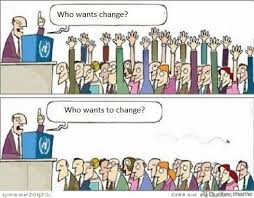
change reality

HBR Management Tip of the Week

The best way for organizations to drive the business forward is to make sure that employees are continually learning. Building a LEARNING culture is better than building a KNOWLEDGE culture, because you create an organisation that can continually adapt to the changing world.

What can managers do to encourage learning?

When you’re hiring, look for people who have demonstrated that they’re lifelong learners. Then look for services that provide up-to-date, relevant content on a wide variety of topics.

Don’t worry if your employees want to learn something that’s not directly related to their job.

By learning something new, no matter what it is, they’re practising the skill of learning, which is invaluable. Plus, you never know how learning an unrelated skill can help down the road. But do take an active role in partnering with your employees to figure out the skills they need to develop based on business goals.

And don’t forget to encourage and reward people who demonstrate quick adaptive learning.

Adapted from “To Stay Relevant, Your Company and Employees Must Keep Learning,” by Pat Wadors 

Three steps to Driving Customer Analytical Success

innovation

There are three simple steps to ensure Customer Analytics drive commercial success in an organisation

  1. Strive for excellence in customer analytics matters (vs merely good average).
  2. Establish a culture that values fact-based decision making and analytics
  3. Secure senior management involvement in customer analytics.
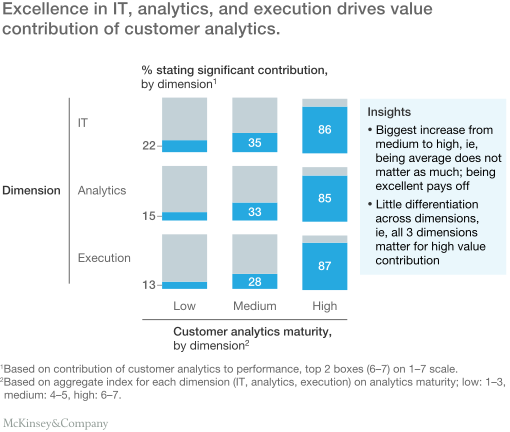
  1. Strive for excellence in customer analytics matters (as opposed to a merely good average). More than 85 percent of companies that report extensive use of customer analytics (in terms of IT, analytics, and its execution) claim their company achieves a significant value contribution from customer analytics. This compares with around 20 percent for low users of the function, and some 30 percent of moderate users—suggesting that companies start to reap substantial benefit from customer analytics only when they achieve excellence, i.e., when their function can be considered state of the art. Just moving from a low to a medium level of maturity will merely generate limited success

This has particularly important implications for managers and their decisions on what needs to be invested in their organisation’s customer analytics to be competitive in the future. They need to determine the performance gap between their current customer analytics and state-of-the-art customer analytics in their industry, and to ensure that their additional spending on customer analytics stands a fair chance of bridging this gap. Otherwise the additional spending will—despite the best of intentions—turn out to have been a sunk investment right from the outset (because it will not pay off eventually).

2. Establish a culture that values fact-based decision making and analytics.

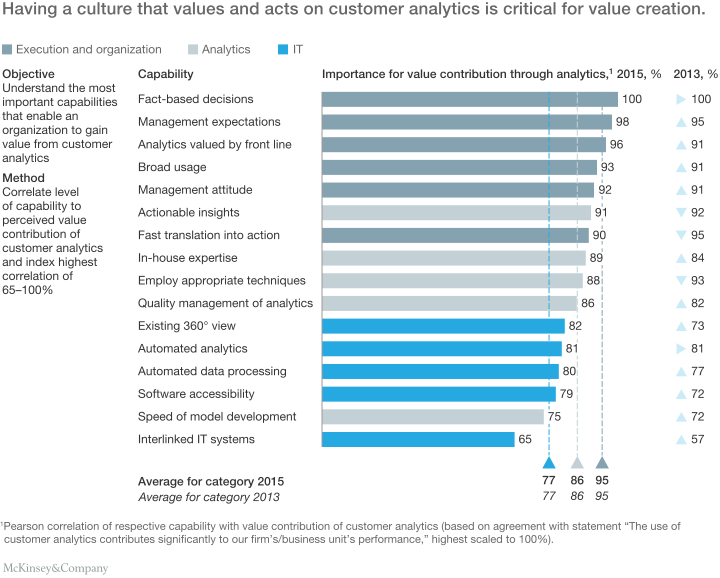
It’s vital that the culture that is not focused purely on IT and analytics topics, but approaches customer analytics holistically. Although investments in IT and skilled employees are important, these investments alone will not deliver value. Leadership that expects fact-based decisions and an organization that can quickly translate those decisions into action are qualities more likely to lead to success than companies focused exclusively on IT.

a) the execution and organizational aspects of customer analytics (such as a culture of fact-based decision making, analytics valued by the front line, management attitude and expectations) correlate most with the value contribution of customer analytics . This suggests that it is the culture and organizational setup that moves the needle even though IT and analytics expertise are obviously necessary to create value from customer analytics.

b) Having pragmatic and actionable foundations with the right cultural mind-set in place within the organization is more important than the perfect solution. Within execution and organization, for instance, fact-based decision making and management expectations are more important than the speed at which these insights are put into action. Within analytics, the focus is on delivering the right actionable insights, and less on the fast development of new models. Looking at IT, a similar pattern emerges: a pragmatic 360° data mart that builds the foundation for customer analytics is more important than the complete (automated) linkage of all IT systems.

A key success factor is therefore to examine customer analytics holistically, including IT, analytics, and execution/organizational setup, and to pragmatically improve on all dimensions.

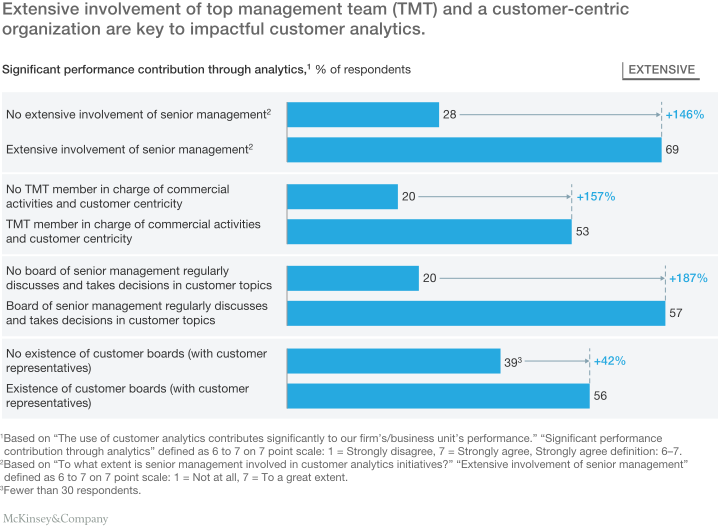
3 Secure senior management involvement in customer analytics. High-performing companies are led by data-savvy C-level executives who understand the importance of and involve themselves in customer analytics. Companies where senior management is not involved extensively, only 28 percent report a significant value contribution of customer analytics, versus 69 percent of companies with senior management involvement in customer analytics that say that customer analytics drives value

Specifically, looking at the level of management that should be involved, it becomes clear that what drives the value contribution is top management/board involvement. If the company has established a role within the top management team (TMT), such as via a chief commercial officer, more than half of the respondents (53 percent) stated that customer analytics contributes significantly to value creation. If only senior management is involved but not the TMT, this drops to just 29 percent, close to the value of no senior management involvement at all (20 percent).


In summary: three factors to drive Analytical Success:

  1. Strive for excellence in customer analytics matters (vs merely good average).
  2. Establish a culture that values fact-based decision making and analytics
  3. Secure senior management involvement in customer analytics.