When taking a Risk is safer than Sticking

tesla-wall-charger-e1442438329238

HBR Management Tip of the week

Most of us consider ourselves to be risk averse, but what we consider “safe” behaviour often contains much more uncertainty than we suspect. That’s because safety generally involves consistency of a condition — whether that’s job security, a stable marriage, or the value of a currency.

The challenge is that there are very few environments that remain static. “Safe” investments like gold can lose value. You could be fired from your “safe” job. And yet we behave as if the current state will persist in perpetuity.

While no one can predict the future, there are a few tactics you can use to get better at evaluating risk. Before you make a decision, do your research on all of the potential avenues of action. Ask credible experts to weigh in. And don’t forget to evaluate the inherent risk of doing nothing. Sometimes the status quo is actually riskier than taking a leap into the unknown.

Adapted from “Why That Risky Career Move Could Be a Safer Bet than You Think,” by Karen Firestone

Data driven President Trump

trump-inauguration-2

data pulse #45

Donald J Trump has now become the 45th President of United States of America, with an inauguration speech that laid out a very different vision of America First driven from his appeal in Middle America. He lost the popular vote to Hilary Clinton by 3m but won the vote in the electoral college by a landslide.

President Trump achieved success in the electoral college by building a data juggernaut ahead of the one Barack Obama built 2008/2012: putting tools in place to get out the vote for his supporters in the counties and states that mattered to win

In 2015 his campaign assembled an experienced data team to build sophisticated models to transform fervour into votes. The team is led by two low-profile former data strategists, Matt Braynard and Witold Chrabaszcz, and they used  the Republican Data Centre plus supercharging it.

The RNC Data Center 2016 is a powerful query and data management tool, providing an interface for over 20 years of voter contact data. This allows Republicans / Trump to read and write data to and from the platform, continuously serving up the latest information to Trump. If Trump wanted to find 10 people on a residential block that haven’t voted in the past 20 years, have strong views on conservative topics and don’t like the Affordable Care Act, they could do so in seconds.

The system is described as the ‘centrepiece of the RNC’s new data-driven political ground game.’ Voter scoring is employed to track each individual in for contact (by mail, door, phone) and whether they voted (by absentee or on Election Day). Advanced voter profiling even matches social data to voter data automatically

The data push is focused on integrating information Trump has collected, through his campaign website and at voter rallies, on nontraditional or unregistered supporters. It also includes commercial data obtained from the RNC and other sources, in an effort to mobilize voters in key early states.

A data driven Trump stormed ahead in Key seats in 2016. The challenge now is now President Trump applies these lessons for the next 4 years.

2016 electoral map.png

Check out other Blogs : Data Driven Rednecks, Obama in Subscription Business

10 thoughts on exponential age

hands

The world is changing rapidly and that change is accelerating.

In 1998, Kodak had 170,000 employees and sold 85% of all photo paper worldwide.  Within just a few years, their business model disappeared and they went bankrupt. What happened to Kodak will happen in a lot of industries in the next 10 years – and most people don’t see it coming.

Did you think in 1998 that 3 years later you would never take pictures on paper film again? Yet digital cameras were invented in 1975. The first ones only had 10,000 pixels, but followed Moore’s law. So as with all exponential technologies, it was a disappointment for a long time, before it became way superior and got mainstream in only a few short years.

It will now happen with Artificial Intelligence, health, autonomous and electric cars, education, 3D printing, agriculture and jobs.

Welcome to the 4th Industrial Revolution. Welcome to the Exponential Age.

Here’s 10  thoughts :

  1. Software will disrupt most traditional industries in the next 5-10 years.Uber is just a software tool, they don’t own any cars, and are now the biggest taxi company in the world. Airbnb is now the biggest hotel company in the world, although they don’t own any properties.
  2. Artificial Intelligence: Computers become exponentially better in understanding the world. In the US, young lawyers already don’t get jobs. Because of IBM Watson, you can get legal advice (so far for more or less basic stuff) within seconds, with 90% accuracy compared with 70% accuracy when done by humans. So if you study law, stop immediately. There will be 90% fewer lawyers in the future, only specialists will remain. Watson already helps nurses diagnosing cancer, 4 time more accurate than human nurses. Facebook now has a pattern recognition software that can recognize faces better than humans. By 2030, computers will become more intelligent than humans.
  3. Autonomous Cars: In 2018 the first self-driving cars will appear for the public. Around 2020, the complete industry will start to be disrupted. You don’t want to own a car anymore. You will call a car with your phone, it will show up at your location and drive you to your destination. You will not need to park it, you only pay for the driven distance and can be productive while driving. Our kids will never get a driver’s license and will never own a car. It will change the cities, because we will need 90-95% fewer cars for that. We can transform former parking space into parks. 1.2 million people die each year in car accidents worldwide. We now have one accident every 100,000 km, with autonomous driving that will drop to one accident in 10 million km. That will save a million lives each year.Most car companies may become bankrupt. Traditional car companies try the evolutionary approach and just build a better car, while tech companies (Tesla, Apple, Google) will do the revolutionary approach and build a computer on wheels. I spoke to a lot of engineers from Volkswagen and Audi; they are completely terrified of Tesla.
  4. Insurance Companies will have massive trouble because without accidents, the insurance will become 100x cheaper. Their car insurance business model will disappear.
  5. Health:  There will be companies that will build a medical device (called the “Tricorder” from Star Trek) that works with your phone, which takes your retina scan, your blood sample and you breathe into it. It then analyses 54 biomarkers that will identify nearly any disease. It will be cheap, so in a few years everyone on this planet will have access to world class medicine, nearly for free.
  6. 3D printing: The price of the cheapest 3D printer came down from $18,000 to $400 within 10 years. In the same time, it became 100 times faster. All major shoe companies started 3D printing shoes. Spare airplane parts are already 3D printed in remote airports. The space station now has a printer that eliminates the need for the large number of spare parts they used to have in the past.At the end of this year, new smart phones will have 3D scanning possibilities. You can then 3D scan your feet and print your perfect shoe at home. In China, they already 3D printed a complete 6-storey office building. By 2027, 10% of everything that’s being produced will be 3D printed.
  7. Work: 70-80% of jobs will disappear in the next 20 years. There will be a lot of new jobs, but it is not clear if there will be enough new jobs in such a small time.
  8. Agriculture: There will be a $100 agricultural robot in the future. Farmers in 3rd world countries can then become managers of their field instead of working all days on their fields. Agroponics will need much less water. The first Petri dish produced veal is now available and will be cheaper than cow-produced veal in 2018. Right now, 30% of all agricultural surfaces is used for cows. Imagine if we don’t need that space anymore. There are several startups that will bring insect protein to the market shortly. It contains more protein than meat. It will be labeled as “alternative protein source” (because most people still reject the idea of eating insects)
  9. Longevity: Right now, the average life span increases by 3 months per year. Four years ago, the life span used to be 79 years, now it’s 80 years. The increase itself is increasing and by 2036, there will be more than one year increase per year. So we all might live for a long long time, probably way more than 100.
  10. Education: The cheapest smart phones are already at $10 in Africa and Asia. Until 2020, 70% of all humans will own a smart phone. That means, everyone has the same access to world class education.

Use Storytelling to explain your company’s purpose


The idea of “purpose” has swept the corporate world. Encouraged by evangelists like Simon Sinek, myriad firms like Coop, are devoting real time and attention to explaining why they do. But activating purpose is impossible without storytelling, at both the corporate and individual levels. Purpose is essential to a strong corporate culture, it is often activated and reinforced through narrative. Individuals must learn to connect their drives to the organization’s purpose and to articulate their story to others.

This is hard for most business leaders. Great leaders are often humble and reticent to speak about themselves. This impulse is admirable, but it falls short of what’s needed to inspire people to join in the purpose of an organization. And many businesspeople feel more comfortable with waterfall charts and P&Ls than with telling their own stories.

Only narrative can do that. Storytelling is a skill that leaders can — and should — hone.

Self, Us, Now

Ganz argues that for people to inspire others with the mission of their organization or cause, they must first link that mission to their own motivations, and then connect it through story to those of the people they are hoping to persuade. Ganz has developed a simple framework for those hoping to develop a narrative approach to their purpose-driven organizations: ” Self, Us Now”

Self

To create a public narrative for your own organization, start with “self.” This is perhaps the most difficult part for many businesspeople because it involves focusing on real events in one’s own life and explaining how these incidents established the values that will later link to the values of the organization.

steve jobs stanford

An excellent example of this is Steve Jobs’s address to the Stanford graduating class in 2005. The address was largely a deeply personal reflection on Jobs’s personal history — his working-class upbringing, his dropping out of college. Perhaps more importantly, however, he spoke about how his love of calligraphy instilled with him a love of design that would later guide his work at Apple, and how his cancer diagnosis reinforced in him a deep desire to live passionately and authentically — as if each day were his last. It’s beautiful storytelling, and it gives you a glimpse into who Jobs was, what he valued, and how that would later guide his work at Apple and elsewhere. What’s compelling about Jobs’s address is that it seems authentic and raw. A great story of self has to be a real story of self. Finding that story may require a leader to reflect deeply on her past and motivations, and communicate them honestly — even those parts that are embarrassing or imperfect.

Us

The next step, “us,” aims to connect these values with broader shared values of the audience — clients or employees, for example. In this step, you weave your own personal narrative into the narratives of others through shared values, experiences, hopes, and aspirations. In doing so you create a common narrative for the group or organization. In literature, a well-known example of this (one that Ganz often highlights in class) is the St. Crispin’s Day speech from William Shakespeare’s Henry V. In it, King Henry, attempting to motivate an English army demoralized by their lack of strength, calls on his troops to be a “band of brothers” fighting valiantly together for each other, their country, and the values they share.

anita roddick.jpg

While it’s miles away from the battlefield of Agincourt, The Body Shop is a Good example of how a business applied this technique. They focused telling the story of their mission : ‘To dedicate our business to the pursuit of social and environmental change.’ using our stores and our products to help communicate human rights and environmental issues. They feature the story of their founder Anita Roddick on the website. The story of Anita and her husband founding the Body Shop in Brighton in 1976. Anita wanted to found a health and beauty products skin care, hair care and make-up that are produced ethically and sustainably. It was the first beauty company to ban testing on animals use Fairtrade products and still sources Fairtrade products from around the world.  Anita was company spokesperson for years beyond her operational involvement. Just before Anita’s death in 2007 Body Shop was sold to L’Oreal , acting as a “Trojan Horse for environmental change within multinational organisations”.  A great “story of us” establishing a community, its values and how they came to be.

http://www.anitaroddick.com/aboutanita.php

Now

Finally, the close is what Ganz calls the “now” — an urgent call to action for those who wish to share the purpose of a group or an organization. Consider Great Ormond Street Hospital. one of the most trusted charities in UK.  The organization’s purpose is “Finding Cures. Saving Children,” and their site is filled with the stories of the kids they serve. Their call to action – often, simply to give financially — is simple, direct, and compelling in their videos and materials. meet patients like Dominic….. ( and Joe,Lara.Matthew,Sophia,Stanley, Zihora….)

http://www.gosh.org/meet-our-patients/dominic

Kickstarter

Kickstarter, similarly, has an impactful way of asking people to join its team. That narrative starts by having its founder tell the story of the company (the “self”). Their website includes pictures and short descriptions of each and every company employee (“the us”). Finally, the narrative culminates its “now” call to action with a careers page asking: “Love Kickstarter? You’ll fit right in.” These stories are most powerful when they are individually authentic, build to a collective narrative and values, and then seal the deal by asking the person reading, watching, or listening to join in.

Storytelling can be awkward and unfamiliar to many professionals, particularly if you’re sharing personal experiences. Yet the motivation for this storytelling is not self-aggrandizement, but to create a purpose and culture that others can share.

Purpose is what builds real passion, motivation, and buy-in for the stakeholders of any organization. And it can be articulated by leaders who’ve learned to tell their stories and the stories of the organizations, people, and causes they serve.


#data centric CEO of the future

talktalk-ceo-dido-harding

Recent data breaches show  , once again, the issue of cyber-security, and the apparent ease with which it can be committed. Looking after their customers’ data as if it were their own must be the first priority of that business, thus the rise of a new, data-centric CEO, and a new data-centric Chief Customer Officer.

The truth is that no one really wants to think about or discuss cybercrime; not only do consumers not seem to understand the breadth and depth of what is actually happening on the dark web, they don’t really want to sacrifice any of the free services they receive in exchange for their personal data – so they stick their heads in the sand and hope for the best.

Any business wouldn’t exist on the high street if it didn’t lock its shops up at night, or have a team of “loss prevention experts” that ensured people didn’t just walk in, pick up and walk out with stock or money. Cyber security is just like any other security or loss prevention, just digital and in “cyberspace”

Additionally, consumers will have to take much more responsibility for their personal data. Currently in love with the “frictionlessness” of many an app or service online, they eagerly exchange more personal data than is probably necessary; such is the pull and promise of convenience.

Organisations need to think about customers data being their own data not the organisations and they need to take treat it as if it belonged to each and everyone of their customers. If they don’t look after it in the way that their customers expect, they will lose trust and ultimately lose their customers and their business.

Customers will choose the brands that they trust:  It is very possible that one day it will be ‘choosers’ who demand of the brand that it signs up to their terms and conditions, not the other way around.

The Best Leaders REALLY Listen

customer 5

Leadership Tip of the Week

adapted from HBR

In a world of instantaneous global connection, one of the most authentic modes of communication still is just listening to someone.

But listening can be a challenging skill to master. How can you build your ability?

Start by creating space in your day. Block off time in your calendar to reflect on a recent conversation and to prepare for the next one. When a colleague or employee asks for advice, make sure you understand the situation. Before answering, ask a question. Clarify what they really need. And give people your full attention. Look them in the eye. Put down your phone and close your laptop.

Leaders who make time for uninterrupted face-to-face conversation find that it’s one of their best management tools.

Adapted from “Listening Is an Overlooked Leadership Tool,” by Melissa Daimler

Starbucks data driven mobile approach

starbucks

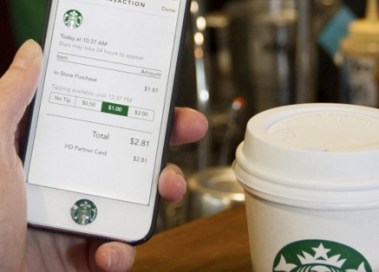
Starbucks have adopted a data driven mobile first approach to making the customer journey simpler and easier in its coffee shops world-wide. 

Innovating and transforming the Customer experience by leveraging data-driven analytics and technology is critical for success in a 21st Century convenient foodservice retailer. 21% of Starbucks transactions are now completed via mobile … in store at the till using Apple Pay via app or using Starbucks Mobile Order and Pay . What’s more is Starbucks processes more than 6million Mobile Order and Pay transactions a month globally.

Mobile Order & Pay is available on iOS and Android . It’s a relatively new feature of the popular Starbucks mobile app that allows customers to place and pay for an order in advance of their visits and pick it up at a participating Starbucks location. Following successful launches in select US cities , mobile ordering is emerging as the fastest and easiest way for Starbucks customers to order ahead , then pay and pick up their purchases, providing on-the-go customers a simple and quick alternative to get their favourite coffee. Massive in USA and beginning to be trialled in UK,There’s a trial store on Tottenham Court Road.

The Mobile Order and Pay feature allows customers to choose a store from a (Google) map view , browse , select and customise drinks, view the estimated time the order will be ready and pre-pay the order. All within the Starbucks app, and integrated into the existing Starbucks app, and my-Starbucks Rewards loyalty programme. A simple easy way to sign up and earn Stars

Starbucks are leading the way as Tech leaders in convenience foodservice, using data and technology in a way that McDonald’s , Burger King and Dunkin’ Donuts will need to respond to rapidly if they want to respond to customer needs.


Maintain Your Entrepreneurial Passion by Being Flexible

steve jobs stanford

Leadership Tip of the week

adapted from HBR

Most of us think of entrepreneurs as passionate professionals who have a “fire in their belly.”

But it’s hard to maintain that level of dedication no matter how passionate you are, and research has shown that entrepreneurs’ enthusiasm for their projects can fade over time.

One way to prevent this is to avoid sticking to a plan. Strictly adhering to your business plan is a recipe for disengagement.

You need to be flexible and agile as you learn more about your product, your customers, and the market. This isn’t just good for your business; it keeps you excited about your project as you continue to evolve it. By changing and refining your ideas, you can make significant progress and build your confidence.

Rather than feeling misunderstood by the outside world, you will gain a sense of control over events as they unfold, which will counter any decrease in passion over time.

Adapted from “How Entrepreneurs Can Keep Their Passion from Fading,” by Veroniek Collewaert and Frederik Anseel

Which Skill Do You Want to Develop Next?

people4Leadership Tip of the week

adapted from HBR

Success requires continual growth and learning. But how do you know which development efforts will yield the best return? Here’s three tips:

  1. Look for the overlap between what your organization needs and what will give you the most satisfaction. If you’re in operations, you might identify several business-critical areas for improvement — say, learning to better manage large custom client projects in order to significantly reduce cycle and delivery times.
  2. Think about whether you can excel at the capabilities you want to develop. If you’re already very organized, that bodes well for being able to learn complex project management.
  3. Honestly assess how interested you are in the capabilities. The key is to focus on skills that will propel your organization forward, play to your strengths, and keep you passionate about learning.

Adapted from “How to Decide What Skill to Work On Next,” by Erika Andersen

Make sure you learn from Mistakes

customer 6

Leadership Tip of the week

adapted from HBR

Continuing to grow and innovate means taking risks, which naturally involves making mistakes.

But mistakes don’t mean a leader should discourage experimentation. Rather, leaders should encourage people to take time to understand why mistakes happened in order to minimise them in the future.

  • Trace previous mistakes back to their roots to identify the causes and what can be done differently next time.
  • Use role-playing exercises, debates, or even formal business war games to think through how a new strategy might play out differently.
  • Try to look at things from a competitor’s point of view to factor in a new perspective.

Mistakes are inevitable and can be costly, so don’t waste them — learn from them.

Adapted from “Don’t Let Your Mistakes Go to Waste,” by Mark Chussil

How to give good feedback

Yes, You Can Provide Feedback in a “Nice” Organization

customer 5

Building candour and feedback into any culture is challenging, but it can be particularly difficult in “nice” organisations, where behaviour is expected to be poised, respectful, and professional at all times.

In general these are positive qualities, but learning a new skill (like giving feedback) is inherently messy.

We learn by trying, getting it wrong, understanding our errors, and then trying again.

Start with yourself: Show your team that you are making a serious effort to improve, and actively request feedback from your peers. Really listen to what you hear. And make sure to identify when feedback would not be helpful.

Remember the acronym HALT—don’t give feedback if you are Hungry, Angry, Lonely, or Tired. Since candour and feedback involve other people, you’ll likely encounter misunderstandings, hurt feelings, or other conflict. Don’t expect feedback to always feel natural or easy.

A little discomfort and a few mistakes means you’re on the right path.

Adapted from “How to Give Negative Feedback When Your Organization Is ‘Nice,’” by Jennifer Porter

Get the crowd to Weigh in on Strategic Decisions

customers 11

Leadership Tip of the Week

adapted from HBR

In most organizations authority for the most important strategic decisions is left to the highest-paid person’s opinion (HiPPO).

But relying on the judgement of one person or a few individuals is bound to lead to trouble. HiPPOs often are wrong, due to inherent biases, misinformation, and other types of noise that can cloud one person’s opinion.

To cancel out much of that noise, companies should integrate crowd voting into their decision-making strategies. Crowd voting integrates the expertise, knowledge, and perspectives of many people. These opinions can help shape a more well-rounded frame of reference, and can vastly improve the chances that a strategic decision will lead to success.

Crowd voting doesn’t render HiPPOs obsolete; rather, it encourages HiPPOs to work with the crowd in order to develop more-successful strategies.

Adapted from “The Antidote to HiPPOs: Crowd Voting,” by Karim R. Lakhani

Walk away from work this summer….


customers 13

It’s here. Well, it might not be here meteorogically, but it’s here according to the calendar. Summer. That elusive season that promises so much and insists every family has a Plan A, B and C for all activities and events over the coming months.

July and August affect every business in some way whether it’s reduced or increased footfall, staffing issues or supply of services and products. Are you ready? But other than the obvious preparation that you will have included in your strategy planning, how will this summer affect you personally?

Whether you’re a business owner, a manager or a key person in a business, how do you survive summer? Will your own summer holiday be an endless juggle of family commitments and emails; full of those knife edge decisions of knowing just when to peel your eyes away from your phone and answer the 56th cry of ‘look at my dive Daddy’ with genuine interest?

Are you able to switch off completely or is your mind constantly buzzing with ‘what if’, ‘I’d better check’, ‘has that proposal gone’, ‘the project deadline is today’?

Long ago, I read about the value of working ‘on’ your business and not just ‘in’ your business.

A successful business will manage competently without you for a period of time. If you have a team of reliable and professional colleagues around you they will not let you down. If your team are rewarded fairly and empowered to make decisions, they will appreciate the trust and responsibility you give them and rise to the occasion. If your business cannot survive without you, you should be concerned. Delegation is a skill. And if your business only comprises of you, the same principle applies. You must take time out and can do so by outsourcing your communications and properly managing your schedule. Delegate, communicate and recuperate!

So, assuming you’ll be taking a break this summer, what are the major benefits of being able to walk away?

  • Firstly, and most importantly, YOU.

You need time out. There is nothing like a change of scenery or routine to enable you to look at things from a different angle. Perspective is everything. Step away, take time out, reflect and review. These are some of the most valuable activities in your whole business year.

  • Your FAMILY needs you.

Whether it’s children, partners or parents, being able to truly dedicate time to your family is critical. In our world of digital overload, instant access to people and information saturates our every waking moment. Leave your phone at home and allow your communication with your family to be genuine and uninterrupted.

  • Your Health.

Some business owners or managers are very successful in dividing their time up so they can include ‘space’ for themselves in every day. Many successful entrepreneurs are also successful athletes or impassioned by fitness goals. This is no coincidence. Being able to drive yourself towards physical goals is paralleled in driving business goals. Those of us who take time out to exercise are forcing change physically; creating a physical release of stress and tension and focussing the mind on an immediate and tangible result. The body reacts by becoming more alert and capable of withstanding physical demands. The mind has a break enabling you to re-examine your other roles with clarity and a fresh perspective. Your stress levels, your attitudes and your overall health will be hugely improved after a holiday.

  • Your Business.

You may be pleasantly surprised to discover your business thrives without you! Or you may discover ‘holes’ or issues that need addressing, thereby improving business efficiency overall. With the right team with you, the business should cruise through any absence of the manager or owner with little or no disruption. This makes for a strong and robust business.

What’s one of the most important factors in the future success of your organisation. You. Not necessarily your presence, but you. Take time out, walk away and recover. Then set about making the last half of 2016 even better than the first.


Cyber Security: be paranoid not afraid

cyber security 2

What you need to know about Cyber security. 

I recently attended a workshop with several Chief Data Officers and led by Dr Phil Jones MD and Head of Cyber Security for Airbus Defence and Space, and it focused minds on the challenges around CYBER SECURITY. 

Lots has been written about Cyber Security. The new Cyber World of Big Data and connected or networked devices is GOOD. The digitally connected world is an opportunity for the 21st Century, with data stored, processed , discovered and used to make the world better and easier. The CHALLENGE around Security is the Risk and Danger if not properly looked after. 

Cyber Security should be on the mind of all CEOs but in essence is part of any retailers loss prevention team. We wouldn’t leave a shop without a front window, or leave the doors open or unlocked during the night when no one is there. So we should just orientate ourselves to thinking about Cyber Security in the same way we look at Loss Prevention. 

There are 3 categories of Cyber Attacks and Cyber Security

  1. Hacktivists
  2. Cyber Criminals
  3. Nation State Asymetric Warfare.

Cyber Attack costs money : the costs of cyber attack are in the P&L: operational, financial and intangible assets on the balance sheet: brand image / trust. 

Organisations need to have strategies against all three types of attack: . 

  1. Most Hackers attack organisations where there is a large amount of Kudos to be gained from exposing them ( eg Ashley Madison  ) and/ or its relatively easy compared to other sites.The best defence against Hacking attack is to have an organisation that hackers love and trust  ( relatively ) and wouldn’t want to expose, and make it difficult enough to stop them trying ( because there are easier places to hack for the same kudos) 
  2. Cyber Criminals: Go where it’s easiest to attack. don’t leave the front door open, or make it easy to get it. There are some simple things organsisations can do to BE CYBERSTREETWISE. GCHQ and the government have laid out advice on cyberessentials and cyber essentials plus that will significantly reduce threat.
  3. Nation State Attack: if the Chinese Or Russian or any other Government wants to attack your organisation there is probably not that much individual organisations can do in this DAVID vs Goliath battle. But don’t make it too easy for them. If your organisation is of Strategic importance to UK Government then get GCHQ to advise. (Tip: if you’re not sure or don’t know , you probably aren’t )

Cyber Security may appear to be highly technical but the same principles can be applied it as you do to Physical Security

A Safe Way to Cut People Off in Meetings

jellyfish Leadership Tip of Week

adapted from HBR

When meeting participants veer off topic, critical agenda items suffer. But even when leaders or peers intervene, it’s often too late, and the typical approach (“This is really interesting, but can I suggest we get back to the topic at hand?”) leaves everyone feeling awkward.

Thankfully, there is a simple solution to this predicament: the word “jellyfish.” Jellyfish are, of course, those funny-looking creatures that have drifted along on ocean currents for millions of years.

Use the word to prevent drifting in meetings by introducing the jellyfish rule: If any attendee feels the conversation is heading off course or delving into an inappropriate level of detail, they simply say “jellyfish” or “I think we’re having a jellyfish moment.”

It’s a safe, effective, accessible catchall for “Why don’t you take this offline — the rest of us would like our meeting back.”

Adapted from “The Right Way to Cut People Off in Meetings,” by Bob Frisch and Cary Greene

Don’t over-monitor your goals

people2

Leadership Tip of week #7

adapted from HBR

Having goals is a good thing. But the current trend of self-monitoring, whether through time trackers such as Toggl or fitness trackers such as Fitbit, means we’re constantly evaluating ourselves — the sales we make, the hours we work, or the miles we run.

Overmonitoring can get tiring and cause us to lose sight of what really matters. Avoid this trap by taking a more humane approach:

  1. Assess yourself. If you’re constantly measuring what you’re doing and feeling uneasy about things you actually want to do, it’s time to loosen up.
  2. Reevaluate the why. Think about whether you’re monitoring habits because they work for you or because it’s what you think you should do.
  3. Disappoint people. Don’t get overwhelmed by all the things people expect you to do and be. Let some of them go.
  4. Be brave. Stop looking at your self-worth as a scorecard.

Adapted from “The Perils of Overmonitoring Your Behavior and Goals,” by Elizabeth Grace Saunders

Defining your Brand Tone of Voice

digital

The language of a brand is really decided by two things: where you are looking to position your brand in the marketplace; and the personality that you choose to adopt.

  • Brand leaders speak with authority and surety. Their language focuses on stability, history and confidence.
  • Brand challengers speak with defiance. They seek to challenge the way things are so their language focuses on change, hope and (sometimes) revolution.
  • Cult brands focus on exclusivity – so their language is peppered with tribal terms.
  • Artisan brands focus on craft and attention to detail so their language tends to be quieter, more insular and focused on the work.
  • Budget brands often use language based on frugality (how much you save) or generosity (what you get).
  • Quality brands seek to be steady and trustworthy.


In all cases, the language you use as a brand is directly aligned with your value proposition because, of course, language is a very powerful way of capturing and expressing how you see yourselves as a brand and how you want others to think and talk about you.

Personality picks up on these points of view and defines them more specifically. This helps brands in busy and highly competitive markets to distinguish their brand where there may be several brands competing in or for a market position. Here are three of the most important ways to evoke personality through language:


  1. Formality – the type of language that a brand uses is a strong indicator of the type of relationship it is looking to form with customers, and of how the brand sees the exchange between them and their consumer.
  2. Dialect – every brand should seek to own language of its own; a way of talking about what it does and what it stands for that complements the visual identity and adds color and texture in terms of how the brand speaks. Don’t just speak the industry language.
  3. Rhythm – every brand needs a speech pattern. It needs to speak at a certain speed, in particular ways, so that consumers consciously or sub-consciously ‘hear’ the brand’s voice in every interaction.

Once you know where you want to position your brand and you have established a personality that speaks to the strategy and distinguishes the brand from competitors, a really sensible next port of call is the frontline.

Speaking with colleagues is a highly effective way of gauging what customers are looking for in exchanges with the brand, what they like about how they interact now, and where they would like to see clear changes in the tone of communications.  Start inside out . These insights should then be applied to content and structuring of information as well as to tone.

Too often brands fail to make all these changes. They develop a new tone of voice to sit alongside their visual identity but they only apply it to a slither of the interactions they have with consumers.

When a brand fails to carry its new voice through to all its touchpoints, it quickly muddies expectations and experiences. Customers expecting the brand to behave in a particular way find themselves being spoken with in a different, often conflicting, way elsewhere within the same brand.

Here’s my rule. A brand may speak in multiple languages – but it should look as much as possible to speak in one distinctive tone of voice everywhere.

using my own data to tell my Fathers Day story


strava 1

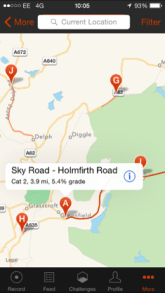
The weather has suddenly turned on the Pennines and summer days arrive and I’ve started to cycle again , and connect with my friends across the country on Strava. This Sunday on Fathers Day I cycled the Turnpike Challenge over the Pennines along with 100s of Lyra Clad Fathers.  

STRAVA: the fitness app gives users access to cycling and running performance data.This is using customers own data combined with Google maps and geo-location to create tools and reports for themselves, a sort of Business Intelligence (BI) for customers or CI. Access is free initially but users can upgrade to Strava Premium for a small monthly fee with added features.

Strava focuses clearly on creating a great customer experience with a really simple sign up, and starting to get going, easy to use maps, and showing routes.

Users compete against their own personal best with friends or people they don’t know but run or ride the same routes as them. They can take part in wider Global community challenges such as last year just after the Nepal earthquake I was challenged to climb 29000 feet in a month on my bike.

Strava Premium users are ranked for routes of segments by day, year and all-time, and can win badges to improve their standing to become  “king of the mountain”. Difficult on popular routes easier if you can find a distant and less popular cycle or running route. Friends connected can give each other kudos for a good cycle.

strava 3    strava 2

STRAVA is also advanced in several other uses of data. It has world class use of segmentation to create relevant communication and improve the customer experience. The more you use Strava the more relevant the communication , linked to running or cycling.

STRAVA links members to the wider community by ranking performance against other users.strava king of the mountain

Challenges create personal competitions as well as a digital community supporting an event e.g. cycle climb 27000 foot to raise money for Nepal earthquake appeal.  Users can receive updates when their connections log activity and recently STRAVA launched the ability to message simply.

The STRAVA Community is a virtual digital community bound by the common interest of Cycling.


Tips to recruit top talent

leaders4

Leadership Tip of the week

adapted from HBR

Whether you’re a founder of a startup, a young CEO, or a veteran leader, if you have big plans, you have one job: Put together the strongest team possible. Here are three concrete ways to attract new top talent:

  • Master the art of storytelling. Tell people what inspired you to start your business in the first place. Others will only follow you if you really leave them with the impression that you yourself are completely captivated by the opportunity you’re presenting.
  • Don’t be a one-trick pony. Every potential employee is different, so the way you can best get your message across will vary. Considering the candidate’s background and personality will give you insight into how you should deliver your message.
  • Never compromise. If in doubt, don’t hire. Your first hires are benchmarks for future hires; new candidates need to set the bar even higher.

Adapted from “6 Ways to Recruit Superstar Talent to Your New Company,” by Bastian Bergmann

DataIQ Summit 2016 thoughts

change reality

I have just spent a day at and spoke at the DataIQ Summit.  David Reed organised a broad church of specialist data leaders who shared their experience of transformation in data led organisations

I shared the stage with leaders from amongst others UK Government, Open Data Institute, The Guardian, Channel4 , Barclaycard Europe Npower as well as the inspirational Alan Mitchell and Inma Martinez

Whilst each speaker shared a different technical solution, there were several consistent themes

  • Customer First: around being given access to customers’ data is a privilege, so be innovative, be clear, bring the business along with you, put customers in control
  • Getting the full potential from data is a Cultural Transformation programme, start with People, Behaviours, Process and then systems and methodology.

I shared learning around how data is not difficult, and the challenge for organisations is improving data literacy. To gain permission and build confidence, you need to find the sweet spot of combining three different areas: be clear on the commercial imperatives, develop customer propositions that solve customer solutions that deliver against those commercial imperatives, and then align the technical teams ( IT, Analytics, developers) to develop the customer solutions that solve the commercial imperatives.

sweet spot

I used case studies from best practice examples how organisations developed through a Crawl, Walk and the Run methodology: (Disney, Sainsbury’s Obama and Trump, Starbucks, 7-11, British Gas, London Transport & Strava)

(check out detailed stories on my blog http://www.andrewmann.me)

In summary other speakers:

Sue Bateman at Government Data services talked through how we don’t just need a data strategy, we need a SMART one to avoid haystacks

Jenni Tennison at Open Data Institute: talked through Open Data is good, use it to innovate and grow. Give customers control, Be clear and add value.

Openness and transparency is at the core of Julia Porter @Guardian strategy for handling personal data.  Being given access to someone’s data is a privilege: Be clear open honest and put customers in control.

guardian datablog

Making Viewing more individual and personalised at Channel 4 Sanjeevan Beta explained how they evolved the customer value exchange using data driven approach to building an engagement ladder.

James de Sousa from Post Office talked through how they are on the journey to create a data driven organisation that is 350 years old and deliver on their purpose: we help you get life’s important things done.  He talked through 3 points to accelerate the change:

  • Push the customer agenda breaking down the product silos,
  • Development of an Agile Scrum process to drive rapid change,
  • Focus on commercial value to take people with you.

The new GDPR is a hot topic for organisations. Christine Andrew from DQM discussed how best to prepare and gave her view on 7 actions to focus on:

  1. Map data flows
  2. Map the customer journey
  3. Categorise and prioritise data by risk (not all data is equal)
  4. Review your partners. If they can’t tell you quickly how they are prepared push harder that’s where the risk is)
  5. Evidence your standards (lots will emerge from ICO, DMA etc)
  6. Ensure you’re are properly resourced for change
  7. Audit yourself to see how prepared you are.

Rob Kent talked through the Cultural Change Programme that the Royal Mail has been going through in the last 5 years. His learning was to focus on where you can create value to gain support in the organisation and at same time build a roadmap for new capabilities.

“the data to run our business would be the data to grow our business”

Rob’s 5 point plan for Royal Mail

  • Set up the Governance (data is a sign off for all investment proposals)
  • Understand data flows
  • Create people process and culture (centralised teams with similar skills)
  • Make efficiencies and invested in People & Skills
  • Invested in Technology and mandated people to use it.

Payal Jain at Barclaycard laid out a calm and measured but very passionate story of her journey at Barclaycard that make the kitten into a Lion.  She laid out the 4 key components she used to deliver the Analytical maturity curve at Barclaycard:

  • People
  • Behaviour and Culture
  • Data Capability
  • Analytical Methodology

Big Thought: It’s not the size of your data that counts: It’s what you do with it.

Two Thought Leaders stood out for me with the questions they posed:

Alan Mitchell at Ctrl+Shift talked about shifting the dial on customer data: debunking Data Constraints and Myths (More data is better, single view of customer is nirvana, more data means you are closer, purpose of data use is to improve the organisation) and laid out a future for data use :

  1. Safe by default,
  2. Leveraging Trust to build a shared relationship,
  3. Flip your data assets ,
  4. develop more information services with the customer.

Certainly a thought piece for creating a different relationship with customers that industry leading organisations should be adopting.

Inma Martinez was an inspiration. She laid out the Brazilian idea of happiness everyday not compartmentalised and set the challenge: “Are you only trying to make sense of the present… what about the future?”

Data is worthless without contextual assumptions: She talked through her experience of creating transformational insight using data through mixing people in a team to randomly collide and increase creativity. The right People teams drove change.

Inma

Three tips:

  • Don’t just analyse the present 2D predict the future 3D
  • Accept messiness
  • Uncover anomalies / deviations which will become trends

Inma is currently looking at the worlds Social Media (Disambiguating the present) to understand the sentiments that are driving people so that Data intelligence can be used to drive product innovation not just marketing. Watch out women control 75% of decisions!

One final point should go to David Reed chairing the day who is championing gender diversity in the Data industry: the speakers at the conference were equally spilt male/ female. A deliberate choice and we should all applaud David’s passion and drive to address the imbalance of women in data industry


Taking data into communities

nike plus

Similar to Strava, Nike+ Running is a fitness tracking app which measures and records running and cycling activity.

nike 1

While the playback of exercise data to users is considerably less detailed than Strava, Nike+ has committed more energy to connecting real world communities with Nike+ Run Clubs and Training Clubs. Run Clubs are for all kinds of runners, with different types of run – Long Run, Speed Run, Track Night and more – designed to help runners achieve their personal goals. Separate to the Running app, Nike+ Training provides over 100 workout routines catering to different needs: Get Lean, Get Toned, Get Strong etc. at beginner, advanced and intermediate levels. Users can share their workouts, see how their friends are doing with their own training programmes and give and receive messages of encouragement.

nike 2

The Nike Training Club puts on free exercise classes in city locations (typically parks and shops) and also feature in some paid-membership gyms. These classes bring together people of all types, regardless of ability.

Nike also stage real world events so that the digital community can become a physical community.

Mike and I both Run Hyde Park and run around the same time.

Nike+ invite us to a NIKE event in Hyde Park,

New Data Laws in Europe

EU Directive cartoon-proposals

#DataPulse 77

It has been over four years in the making but the EU Parliament and Council have finally approved the General Data Protection Regulation (GDPR) after the EU Council of Ministers approved the final text last week.

The compromise agreement reached just before Christmas has remained intact, having been agreed by both the EU Council of Ministers and Parliament. Today’s decision means that the GDPR text will not be amended further and is now in its final state.

A two-year implementation process will begin once the Official Journal of the EU publishes the regulation – the final step to complete before the regulation becomes EU law, though whether that is published before the 23rd June EU Reforendum in UK we’ll wait and see.

The real work for European organisations will now begin. The task of picking over the legislation and interpreting what its real impact will be is now underway.

The ICO who has been heavily involved in consultation and done a great job in the last 3 years will publish its guidance

10 Things that you need to know before ICO guidance comes:

  1. It’s a regulation not a directive so passes straight to law in all 26 EU countries
  2. Data processors will be responsible for data protection
  3. The regulation has global ramifications ( 23rd June vote will not impact UK)
  4. Users will be able to make compensation claims
  5. There are tighter rules on transferring data on EU citizens outside the EU
  6. Harmonised user request rights
  7. New Rights to be forgotten
  8. It’s data controllers responsibility to inform users of their rights
  9. Tougher sanctions- E100m or 5% of global turnover
  10. Encryption and tokenisation can come to your rescue

The Principles of the new Directive are good for customers and good for all of us 450m EU citizens: My data is my data and organisations need to treat it thus

  • Transparency of use to individuals,
  • Data use for specified EXPLICIT and LEGITIMATE purposes only
  • Proportionality

Overall this is good for customers, good for responsible organisations and with 2 years before the directive becomes law there is time to prepare ourselves and use this as an opportunity to build consumers TRUST in an organisation.


Look out for future Blogs on explaining the detail and how to prepare using ICO guidance

Speaking at BRC Insight Conference

change reality

In a time of transformational change, an improving economy, and dynamic technical advances retailers are facing a number of significant challenges as well as opportunities. Leveraging customer insight to build a competitive advantage is now a necessity but often the question remains of how to turn data into actionable insight

I have just spent a day BRC Insight 2016 conference organised by British Retail Consortium and attended by key insight professionals as a speaker and panellist.

I opened Keynote Presentation about how using data is not technically difficult the challenge is around building data literacy. People, Process and culture not the technical implementation.  Finding a sweet spot that combines delivery of commercial agenda, by building relevant customer propositions through technical use of data is the utopia that can be achieved. Four uses of data emerge and I then illustrated the story through case studies of organisations who have made the change in People and Culture and become data driven organisations: Disney, Sainsbury’s, Walmart, Starbucks, 7-11 and Strava amongst others. Check-out case studies on http://www.andrewmann.me

sweet spot

Martin Newman CEO PRACTICOLOGY made a Chairman’s address to set the scene for the day. With over 30 years’ experience in Omni channel retailing, and a friendship with Tim Berners-Lee, Martin laid out how Digital and Data skills should not be in silos in organisations, and DIGITAL/Data should be distributed as a core skill around the organisation which needs to structure around the customer. Bring back good old fashioned personalisation like the Walton’s, where they knew you well. Burberry have started to do in-store personalisation for customers through store colleagues, and assign dedicated staff members to every on-line order.   The customer is now 100% in control of when and from where they buy and retailers need to recognise that in their behaviour.

waltons shopkeep Ike Godsey

Tom Feldmann CEO Brand Alley talked how customers have become fickler and retailers have to be more relevant to them and collect data from every touch point. Brand Alley is a pure play on-line membership retailer with 2m upmarket members. They sell end of season lines for luxury brands and recruits new users for those brands (check them out on www.brandalley.com)

brandalley

Over Coffee the discussion with Richard Baker (chairman of Whitbread and DFS) who I worked with at Sainsbury’s  reinforced how retailers need to use data to improve increased humanisation taking personalisation of the experience back to a human interaction either on digital or face to face. Very relevant for Costa and Premier Inn amongst others.

richard baker


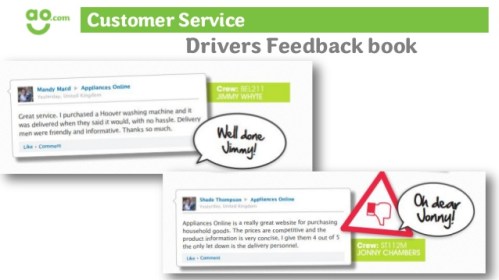
Yossi Erdman from ao.com talked through how they have kept very closely focused on the commercial imperatives in UK’s largest digital white goods retailer, and developed a customer proposition that is more than just price, making white goods products sound interesting, and bringing the service they provide to life.  Good examples of listening to the customer and engaging colleagues in a positive way. Focus on real people , the customers of ao.com and let them tell their own stories. Simple yet very effective.

ao.com 2

John Bovil IT and Ecommerce Director from Monsoon Accessorize talked through the challenges they face joining the dots for members and transitioning from a multichannel retailer to a connected enterprise.  IoT will create so much data that organisations will start to creak and break in the new connected world and they are moving towards the utopia of data & analytics available any-time, anywhere for colleagues through the eyes of the customer.

A common theme emerged across all the presenters and delegates around the challenge in making Process and People changes to change the Culture in an organisation to be more customer focused. Increased listening at pace, together with an increased level of personalisation will drive more customer centric colleagues and organisations.

Use Structured debate to avoid Groupthink

customers5

Management Tip of Week

Adapted from Harvard Business Review

To help your team respond to emerging threats and opportunities while avoiding the dangers of “groupthink” — teams or organizations operating on autopilot — hold frequent, structured debates.

Randomly assign different team members to argue opposing points of view. Then, at a regular team meeting or an offsite, set up a debate with scenarios such as: “Our organization’s mobile app will be obsolete within two years. Here’s what will replace it, and here’s what we need to do now to survive and thrive.”

Ask half the team to argue why the current mobile app is sufficient, and the other half to argue how and why the mobile app needs to be changed.

Debates like this can help overcome people’s reluctance to ask and answer tough questions about how the world has changed or is changing, and how the organization needs to evolve accordingly.

Adapted from “How Structured Debate Helps Your Team Grow,” by Ben Dattner

12 Steps to Data Heaven

EU Directive cartoon-proposals

The new General Data Protection Regulation will become law in June 2016 and organisations have only 2 years to implement changes to be legal and compliant.

Here are 12 steps to take now : endorsed by Christopher Graham  and the Information Commissioner’s Office  ICO.

1. Build Awareness

You need to ensure that CEO and Board members and key stakeholders are aware that the law is changing to the GDPR , and appreciate the impact it’s likely to have. Many organisations I have been talking to aren’t aware at a Board Level of what is coming

2. Document Information you Hold

You should document what personal data you hold, where it came from and who you share it with, probably need to organise an information audit

3. Communicating privacy information

Review all current privacy notices and put a plan in place to put changes in place now so that data collected for the next 2 years is valid once regulation implemented

4. Individuals Rights

You should check your procedures to ensure that they cover all the rights individuals have , including how you would delete personal data or provide data electronically and in a commonly used format

5. Subject Access requests

Will not be able to charge so they will increase in volume: Plan how you will handle requests within the new timetables ( a month) and provide any additional information. Thought leading organisations may automate SARs to allow any customer to see all the date help on them

6. Legal Basis for processing Personal Data

Look at the various types of data processing that your organisation carries out, be clear on the legal basis for carrying it out and document it

7. Consent

Review how you are seeking, obtaining and recording consent, and agree how you need to implement any changes

8. Children

You should be looking at putting in systems and processes to verify individuals ages and to gather parental or guardian consent for data processing activity

9. Data Breaches

Any Breach no matter how small or sensitive needs to be reported. Review procedures in place to detect, report and investigate a personal data breach.

10. Data Protection by Design and Data Protection Impact assessment.

Familiarise yourself and organisation with the guidance from iCO on privacy

11. Data Protection Officers

Designate / Recruit a Data Protection Officer to be responsible for data protection compliance and assess where role will set

12. International

If your organisation is international be clear where your home supervisory body is that you come under.